
Last updated October 17, 2026
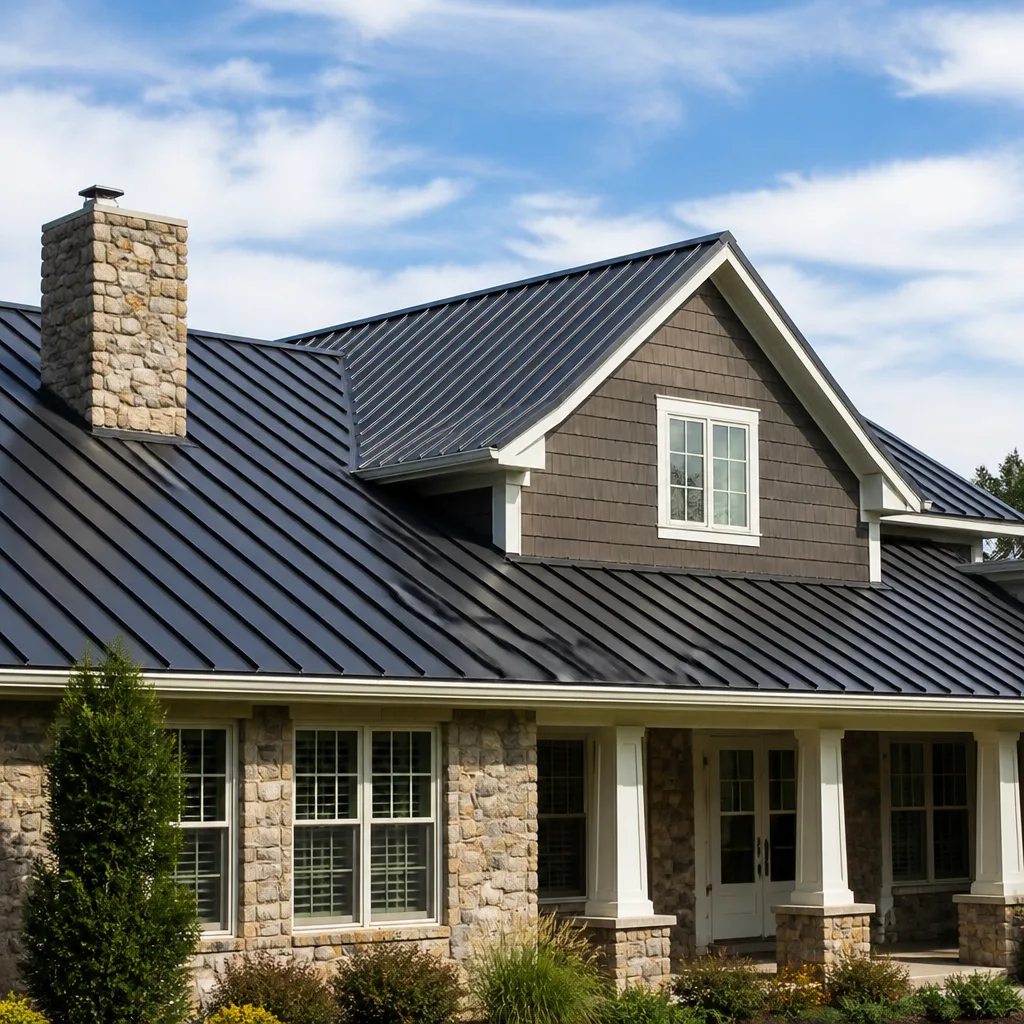 Metal roofing
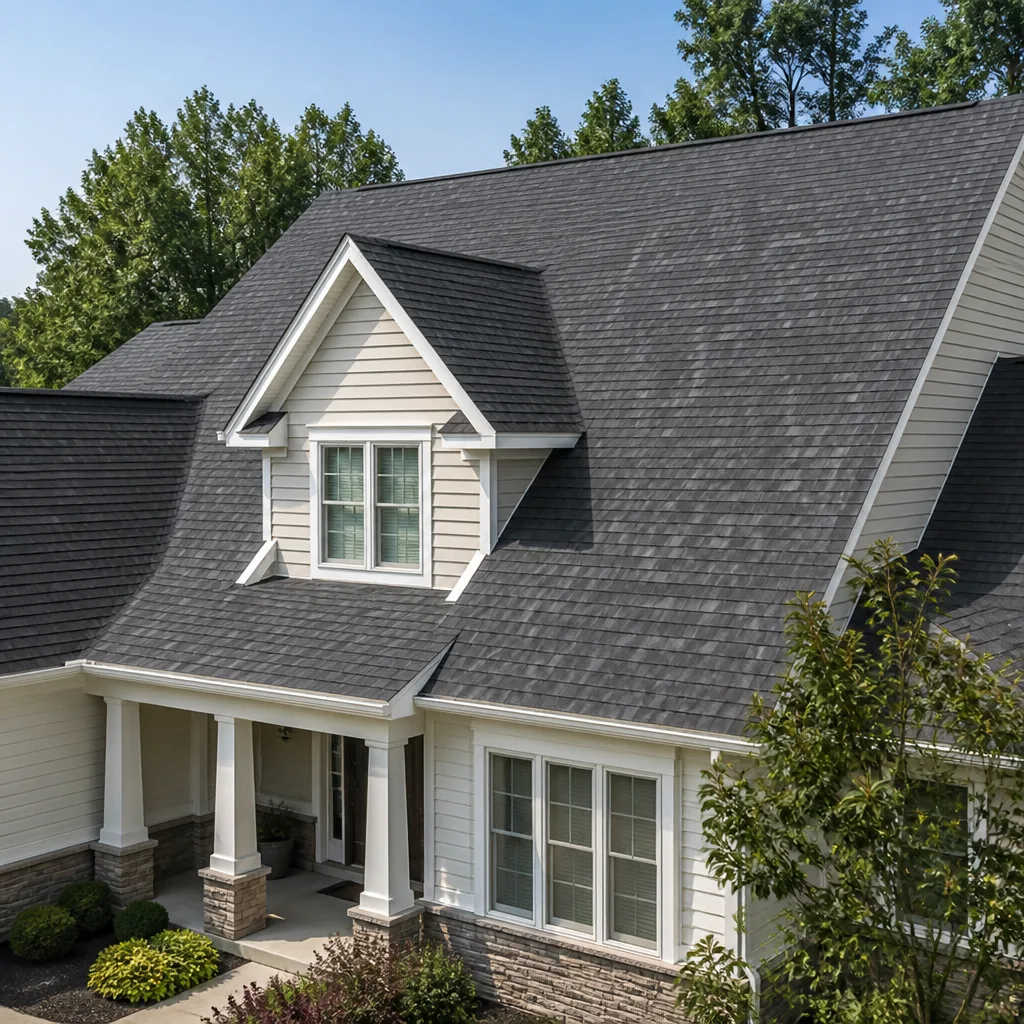 Architectural shingles
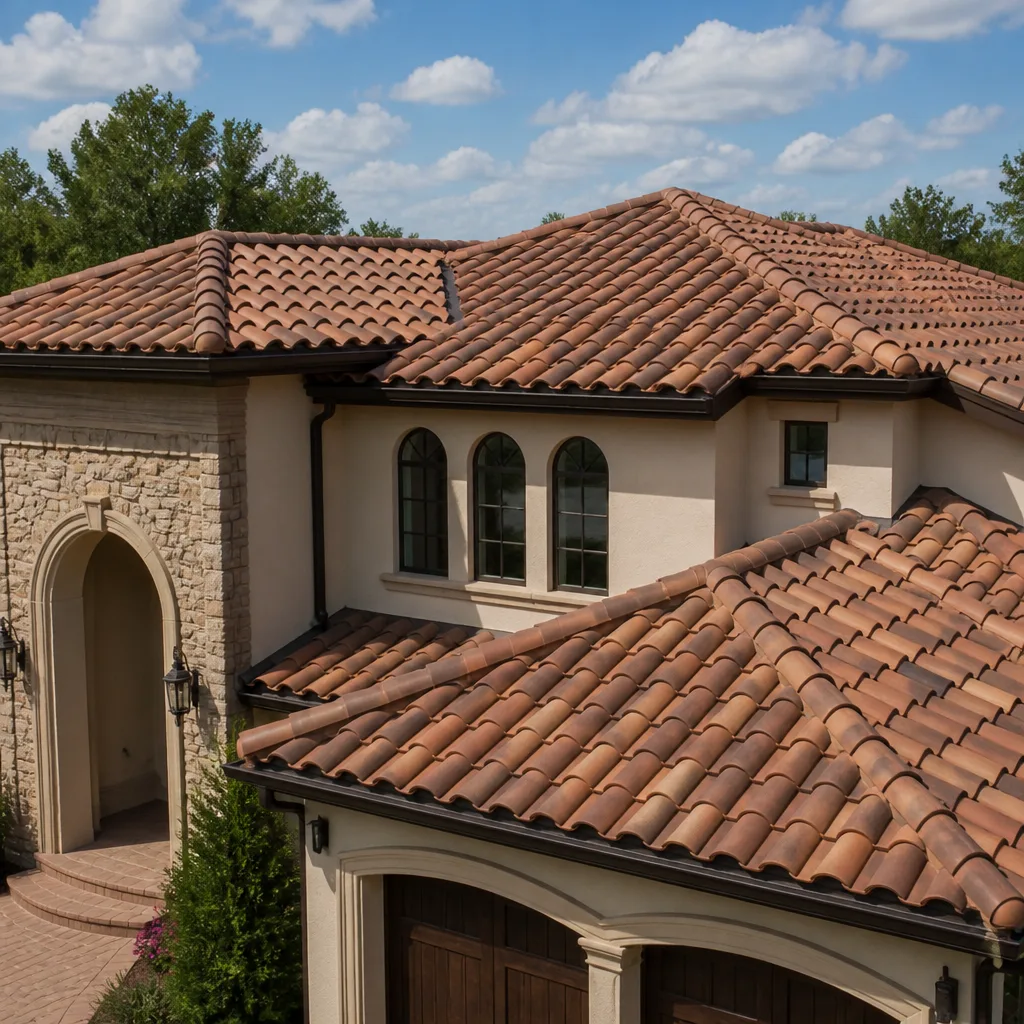 Tile roofing
 GAF
GAF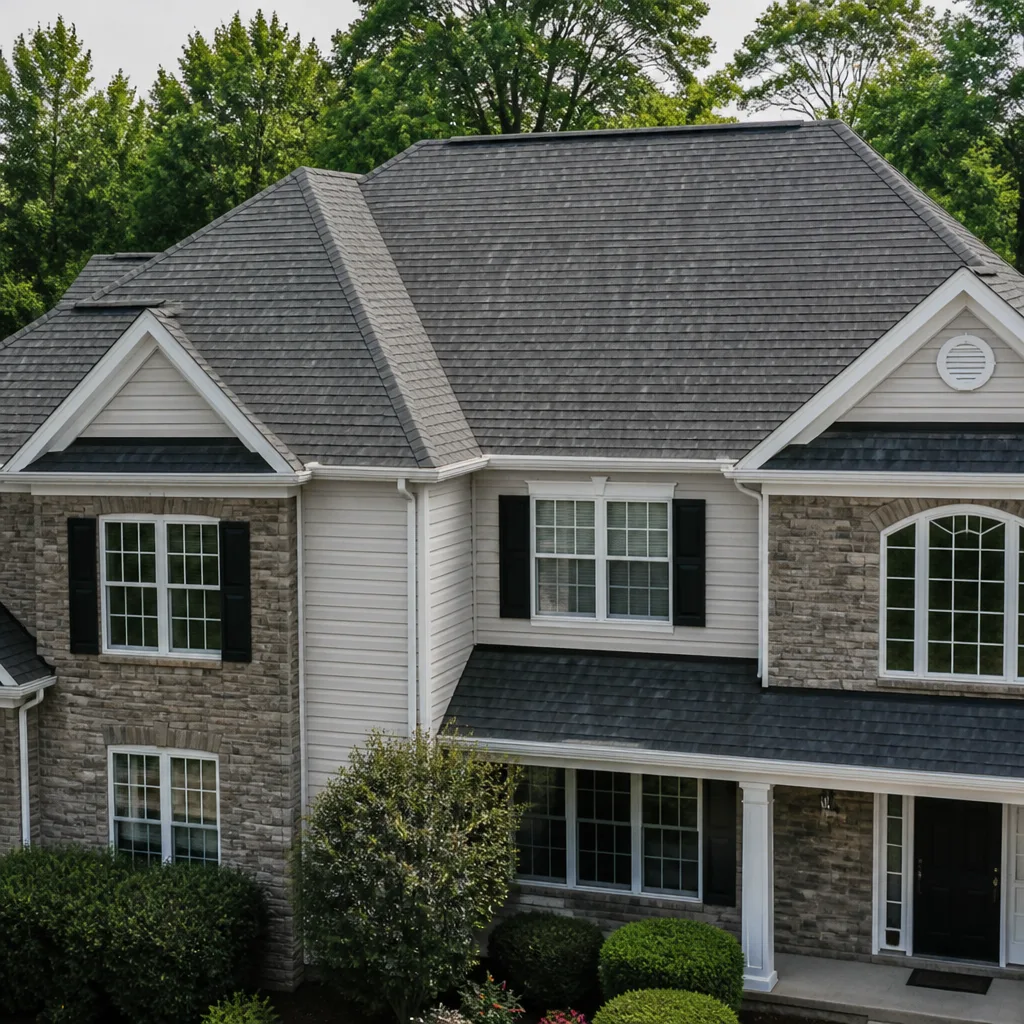 Owens Corning
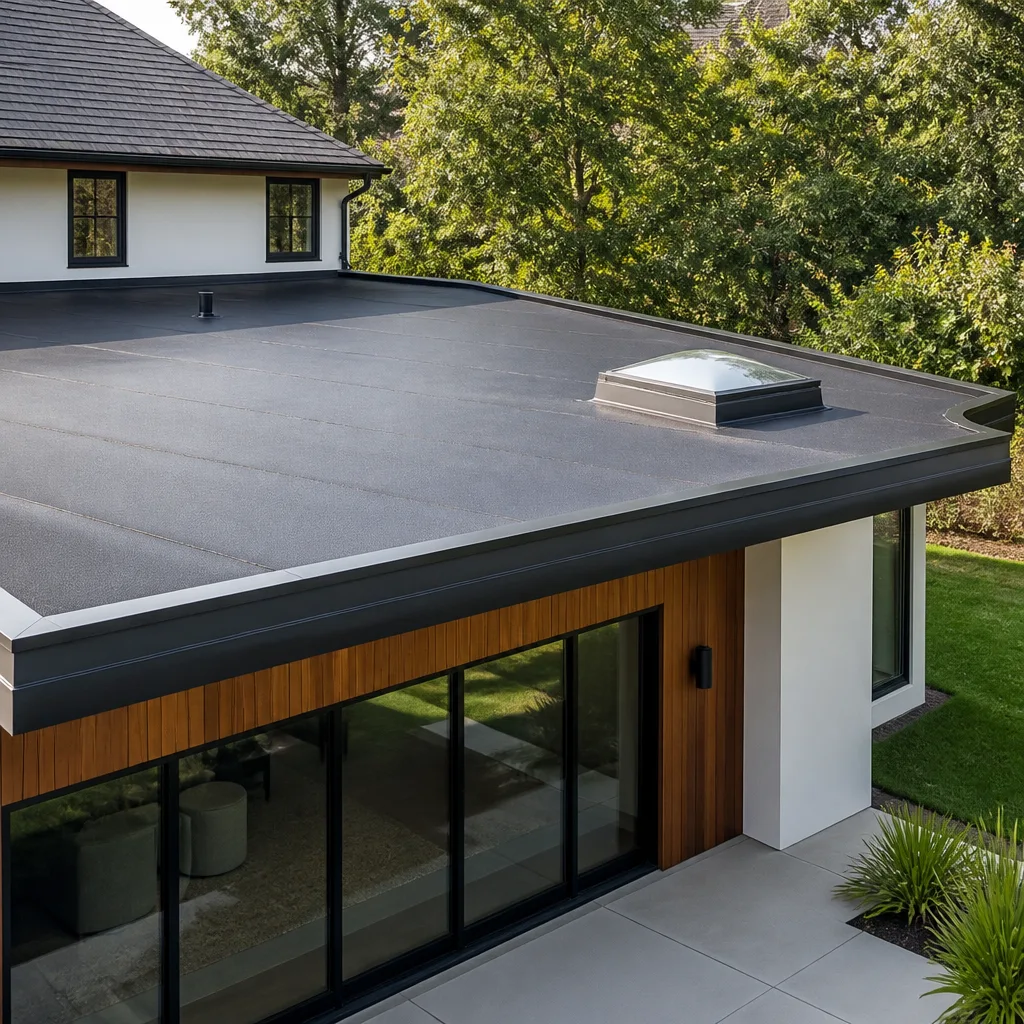 Flat & low-slope
Free roof inspection with deck photos before we talk money - GAF and Owens Corning certified installation
How to Hire a Roofing Contractor in Torrance: A Step-by-Step Guide
Here’s the uncomfortable truth most roofing guides won’t tell you: California’s CSLB database shows a license is active. It doesn’t tell you who will actually show up at your door, whether the crew tearing off your old shingles carries workers’ compensation, or if the company will still answer the phone in six months. In Torrance, where coastal moisture and Santa Ana winds age roofs faster than inland homes, the cost of hiring wrong isn’t just a bad repair. An improperly installed roof means water intrusion, dry rot, mold, and a project that costs double to redo correctly. This guide covers the full hiring process, but it focuses on three verification steps most homeowners skip, and those steps are the ones that separate a trustworthy contractor from a licensed company that’s still a gamble with your home.
Quick Answer
To hire a roofing contractor in Torrance, start by pulling the contractor’s CSLB license and reading the full record, not just the status line. Verify workers’ compensation insurance directly with the carrier, get a written estimate that itemizes materials, labor, permits, and disposal, and ask in writing who specifically will perform the work and whether subcontractors are involved. A durable Torrance roof depends less on shingle brand than on the qualifications of the people actually on your roof, and the documents that should accompany them.
Styles & brands we work with
Table of Contents
- Step 1: Read the CSLB License Record Like a Torrance Homeowner, Not a Tourist
- Step 2: Know What a Legal Written Estimate Must Include in California
- Step 3: Ask About Subcontracting Before You Sign Anything
- Step 4: The Pre-Visit Verification Protocol Every Homeowner Should Demand
- Step 5: Compare Bids Without Falling for the Lowest Price Trap
- Step 6: Torrance-Specific Factors That Change Your Reroof
- Step 7: Door-to-Door and Post-Storm Solicitations in the South Bay
- Step 8: Red Flags That Signal a Contractor Is About to Underpay a Crew
Step 1: Read the CSLB License Record Like a Torrance Homeowner, Not a Tourist
Most homeowners check the CSLB website, see the word “Active,” and stop. That’s the equivalent of reading only a job candidate’s name and declaring them hired. The CSLB record contains several fields that tell you far more about whether a Torrance roofing contractor can actually perform your job, and every one deserves a look.
The two most important fields to check are the classification code and the bond amount. California issues different license classes. A general building contractor holds a “B” license, and that’s legally sufficient for roofing work. But the C-39 classification is the roofing-specific license category, and if a contractor holds a C-39, that’s a signal they’ve demonstrated roofing-specific competency to the state. Ask the contractor for their license number before the first visit, then pull the record yourself at cslb.ca.gov. Match the name on the license to the name on the contract. Mismatches happen more often than they should.
The bond amount tells you how much financial protection exists if the contractor abandons the job or performs defective work. California requires a $25,000 contractor bond for most classifications, but some contractors carry higher bonds. The bond won’t cover a full reroof, but it’s a starting point. More importantly, check the complaint history section. A few minor complaints over a decade are not automatically disqualifying. A pattern of complaints about the same issue, especially failure to complete work or pay subcontractors, is a hard pass regardless of the contractor’s Yelp score.
Workers’ compensation is the one item a CSLB check won’t confirm, and in Torrance, a roofer without workers’ comp is the single biggest hidden liability a homeowner can absorb. If a crew member falls on your property and the contractor lacks workers’ comp, the injury can fall to your homeowner’s insurance. Ask for the workers’ comp policy number and call the carrier directly to confirm it’s active. In our experience, reputable Torrance roofers provide this without hesitation. Reluctance is a signal to end the conversation.
Step 2: Know What a Legal Written Estimate Must Include in California
California law requires home improvement contracts over $500 to be in writing and to include specific items. Shady contractors routinely omit them, and those omissions are never accidents. They’re deliberate room to change the price later. Here’s what your Torrance roofing estimate should always include, in writing, before you sign anything.
A legitimate written estimate includes the contractor’s license number, the full scope of work, the specific materials being installed with brand and model where applicable, the total price, the payment schedule, the estimated start and completion dates, and a three-day right to cancel notice. California also requires the contract to state whether workers’ compensation insurance is carried. If a contractor leaves any of these items out, they’re either careless or strategic, and neither quality belongs on your roof.
Pay close attention to the scope of work language. A vague phrase like “install new roof and repair damage as needed” is not a scope. It’s an open invitation for a change order the moment the old shingles come off. Torrance homes built in the 1950s through the 1970s frequently have decking damage hidden beneath old shingles. A precise estimate will call out the assumed condition of the decking, the price per sheet if replacement is needed, and what happens if damage is discovered mid-project.
The payment schedule matters too. California caps the down payment for home improvement contracts at the lesser of $1,000 or 10% of the total project cost. Anyone demanding more than that up front is violating state law, regardless of what their contract says. Progress payments should align with completed milestones, not calendar dates. Never pay the final installment before the job is complete and the permit inspection, if required, has passed. For a deeper look at what a repair estimate should contain in this city, see Roof Repair in Torrance.
Step 3: Ask About Subcontracting Before You Sign Anything
This is the question that separates a vetted Torrance roofer from a marketing company that sells roofing jobs. The question is: “Who, exactly, will be doing the work, and are any subcontractors involved?” Ask it early and ask it in writing.
Subcontracting is not inherently wrong. Many excellent Torrance roofing companies use subcontractors for specialized work like skylight flashing or tile roofs. The problems arise when the company you contracted with sends a subcontracted crew that is unlicensed, uninsured, and unknown to you. You hired a licensed contractor, but the people on your roof have no relationship with you, no obligation to you, and in worst cases, no workers’ compensation coverage under the company you thought you vetted.
The fix is simple in writing. Before signing, send an email that says: “Please confirm in writing whether subcontractors will be used for any portion of this project, and if so, provide the name, license number, and workers’ compensation certificate for each subcontractor before that portion begins.” A reputable contractor answers directly. A contractor who was planning to hand your job to a day-labor crew will hesitate, deflect, or suddenly get vague.
The same question applies to the crew themselves. Ask whether the company’s employees are W-2 employees or 1099 day labor. In Torrance, where the cost of labor is high, some contractors push the margin by using unlicensed day labor from casual networks. The workers may be skilled, but if they’re not covered by the company’s workers’ comp policy, the risk transfers to you. A trustworthy contractor treats this question as routine. A contractor who won’t answer it is telling you everything you need to know.
Step 4: The Pre-Visit Verification Protocol Every Homeowner Should Demand
You lock your doors at night. You check the peephole before opening it. But when a roofing contractor schedules an estimate, many homeowners simply wait for a knock and open the door to whoever shows up. That’s a strange gap in home security, and Torrance homeowners are right to close it.
Here’s a protocol that should be standard before any roofing professional arrives at your home:
- Ask for the technician’s name before the visit. Not just the company name. The specific person who will be at your door.
- Request a photo. A legitimate company can send a photo of the technician, often through the confirmation text or email.
- Ask what identification the technician will present at the door. The answer should be a state-issued ID or company photo badge. Vague answers are a red flag.
- Confirm the vehicle. Ask what the technician will be driving. A marked company vehicle is a strong signal of legitimacy. An unmarked pickup with a ladder rack is not automatically wrong, but it deserves a more careful eye.
- Verify at the door before letting anyone in. Check the face against the photo. Check the badge. Check the company name on the vehicle. If the person at your door doesn’t match what was provided, close the door and call the company.
This protocol takes two minutes to request and thirty seconds to verify at the door, and it eliminates the most persistent risk in home services: a stranger who arrives without warning and asks to be let inside. This is the standard we hold at Mercer Roofing Co Torrance. We send the technician’s name and photo before every visit, and the person who arrives wears a photo ID badge and a clean, marked uniform. If a homeowner sees someone different at the door, the visit should stop right there.
Torrance is not a town where strangers should be waved into entryways without credentials. Hollywood Riviera, Old Torrance, the Southwood area, and the tree streets are quiet neighborhoods where friendly trust is the norm and predatory contractors count on that. Don’t let familiarity be the vulnerability.
Step 5: Compare Bids Without Falling for the Lowest Price Trap
The standard advice is to get three bids, and it’s good advice with one modification. The three bids should be comparable in scope, materials, and warranty, or the comparison is meaningless. A low bid that omits decking replacement, uses thinner underlayment, or skips the permit inspection isn’t cheaper. It’s a smaller number attached to less work. In Torrance, where reroofs on a typical 1,400 to 1,800 square foot single-story home run roughly $12,000 to $22,000 depending on shingle choice and tear-off requirements, the difference between a $13,000 bid and an $18,000 bid is not always profit margin. For a detailed breakdown, see our Roofing Cost Breakdown: The Torrance Homeowner’s Reference for 2026. It’s often materials and scope.
Here’s what to look for when comparing Torrance roof bids side by side:
- Shingle brand and model. A bid that says “architectural shingle” without a brand is vague on purpose. Ask for the brand and line. Legitimate brands include CertainTeed’s Landmark series and Owens Corning’s Duration line. Cheaper off-brand shingles can be adequate, but you deserve to know what you’re buying.
- Underlayment type. This is the water-shedding layer under the shingles, and Torrance’s Pacific moisture makes it more important than in inland cities. Synthetic underlayment costs more than felt but performs better in coastal humidity. If a bid doesn’t specify this, ask.
- Decking replacement assumptions. A precise bid states the assumed condition of the decking and the per-sheet replacement price if damage is found. A low bid that’s silent on decking will likely become more expensive once the roof is opened.
- Flashing scope. Flashing is the metal that seals roof intersections, chimneys, and valleys. Reusing old flashing saves money and regularly fails. Ask whether flashing is replaced or reused.
- Permits and inspections. Torrance requires permits for most reroofing work, and the inspection protects you. A bid that omits permitting may be cheaper, but it can bite you during resale. A Roofing Company in Torrance that handles permitting as standard practice will tell you so on the page that matters: the estimate.
- Warranty terms. Manufacturers like IKO and Atlas offer material warranties, but workmanship is the contractor’s responsibility. Ask what the contractor’s own guarantee covers and for how long. If the answer is vague, get it in writing. If it’s still vague in writing, walk away.
Step 6: Torrance-Specific Factors That Change Your Reroof
Roofing is not one-size-fits-all, and Torrance has its own set of conditions that a knowledgeable contractor accounts for. A roofer who treats a Torrance home the same as an Inland Empire home is missing the factors that determine how long your roof actually lasts.
The Pacific influence is the biggest one. Torrance sits close enough to the ocean that coastal moisture, morning fog, and salt air work on roofing materials continuously. In neighborhoods like Seaside, South Torrance, and the areas west of Hawthorne Boulevard, salt-laden air settles into roof valleys and around fasteners, slowly corroding metal flashing and accelerating shingle deterioration. A quality Torrance installation uses corrosion-resistant fasteners and considers ventilation more carefully than an inland roof would. Poor attic ventilation traps the moist air that fog brings, leading to condensation on the underside of the roof decking, which leads to wood rot and mold.
Torrance building codes reflect this climate. The city follows California’s Title 24 energy standards, and re-roofing projects may trigger requirements for cool-roof materials or additional insulation depending on the scope. A contractor who is unfamiliar with local Torrance permitting-covered in our guide to Roofing Permits, Codes & Inspections in CA: What You Need to Know-will discover these requirements mid-project. A contractor who works in the city regularly anticipates them before the estimate is written.
Santa Ana winds are the other Torrance factor. The dry, gusty winds that blow from the northeast put real stress on shingle edges and flashing. Improper nailing patterns get exposed quickly when winds hit certain angles. If your home sits on an exposed slope with a long north-facing roof plane, wind-resistant installation matters more than it does on a sheltered lot. These are the kinds of details that don’t appear in generic roofing guides and do appear in a roofer’s decision-making when they know Torrance.
Step 7: Door-to-Door and Post-Storm Solicitations in the South Bay
After a strong Santa Ana wind event or a heavy winter rain, a particular species of roofing contractor appears in Torrance doorways. They’re friendly, they’re “in the neighborhood,” and they noticed “some damage” on your roof from the street. The pitch is urgent: sign now, and they’ll save you the trouble of dealing with insurance.
Here’s what’s actually happening. Storm-chasing solicitors canvass South Bay neighborhoods after weather events because they know homeowners are anxious and the window for competent comparison is short. Their crews are often transient, their workmanship guarantees are worthless once they’ve moved to the next storm-hit city, and their “free inspection” is a sales call in disguise. The Torrance Police Department does not track these operations closely, and by the time a homeowner discovers the flashing is leaking, the company’s phone goes to voicemail.
The red flags to watch for after a storm:
- The contractor initiates the contact. Reputable Torrance roofers are busy with existing customers. They don’t canvas door-to-door after wind events.
- The inspection happens five minutes after the knock. A real roof inspection takes time: attic access, roof-walk, flashing checks, gutter inspection. A five-minute street-level glance cannot tell you the condition of the underlayment.
- Urgency is manufactured. A storm-damaged roof needs timely attention, but any contractor who requires a signature today to “lock the price” is using pressure as a tool. No legitimate Torrance roofer operates this way.
- The company has no local address. Ask for the business address. If it’s a P.O. box, a residence in another state, or vague, walk away.
- The offer includes a “deal” on leftover materials. This is a classic. The crew “just finished a job nearby” and has shingles left over. A roof is not a bulk discount. It’s a structural system.
Torrance experiences fewer tornado-scale events than other parts of the country, but South Bay wind and rain create enough roof damage to keep storm chasers circulating. The fix is to call a local company you’ve vetted on your own schedule, not the one that appears at your door asking to be let onto your roof.
Step 8: Red Flags That Signal a Contractor Is About to Underpay a Crew
This section addresses the most uncomfortable part of hiring a roofer: labor practices. The reason it matters for your roof’s quality is direct. A contractor who underpays or misclassifies workers attracts the least stable crews, and a crew with no loyalty to the company has no loyalty to your roof.
A licensed contractor with an active CSLB record can still be paying cash under the table, misclassifying employees as independent contractors, or using unregistered day labor. You may never see the labor practices, but the signs are visible if you know where to look.
One signal is the price itself. In Torrance, a reroof that bids significantly below the market range for comparable materials and scope is not doing you a favor. They’re cutting costs somewhere, and labor is the easiest place to cut. Another signal is how the crew arrives. If the workers show up in unmarked vehicles with multiple ladders, no company uniforms, and no apparent supervisor, they may be a day-labor crew contracted at the last minute. The website you signed with may be polished; the work is performed by strangers.
Ask directly: “Are your installers employees of your company or independent contractors?” If they’re independent contractors, ask whether the crew carries its own workers’ comp and liability coverage. A reputable Torrance roofer can answer this question without flinching. A contractor who becomes defensive or vague about crew structure is revealing how the job actually operates. This matters for your legal protection and for the quality of the work itself. A roof installed by a crew that’s paid fairly, supervised properly, and accountable to the company whose name is on the contract is a different roof than one installed by anonymous labor moving to the next gig.
Common Mistakes to Avoid
- Checking only the license status. “Active” is the starting point, not the conclusion. Read the classification, bond amount, complaint history, and verify workers’ comp directly with the carrier.
- Taking the lowest bid without comparing scope. A lower number attached to less materials, thinner underlayment, reused flashing, and no permit inspection is not a better deal. It’s a deferred cost.
- Paying more than the legal deposit. California law caps the down payment at $1,000 or 10%, whichever is less. A contractor demanding more is either ignorant of the law or willing to break it, and you don’t want either on your roof.
- Not asking about subcontractors. If the company you sign with hands your job to an unfamiliar crew, your vetting was wasted. Ask in writing and get the answer before signing.
- Opening the door to an unchosen visitor. A technician who shows up unannounced, without prior identification, is a stranger. Torrance homeowners should expect name and photo before the visit, every time.
- Skipping the warranty question. A shingle manufacturer’s warranty covers materials. The contractor’s own workmanship guarantee covers installation errors. If the contractor won’t put that guarantee in writing with a real duration, keep walking.
See the difference
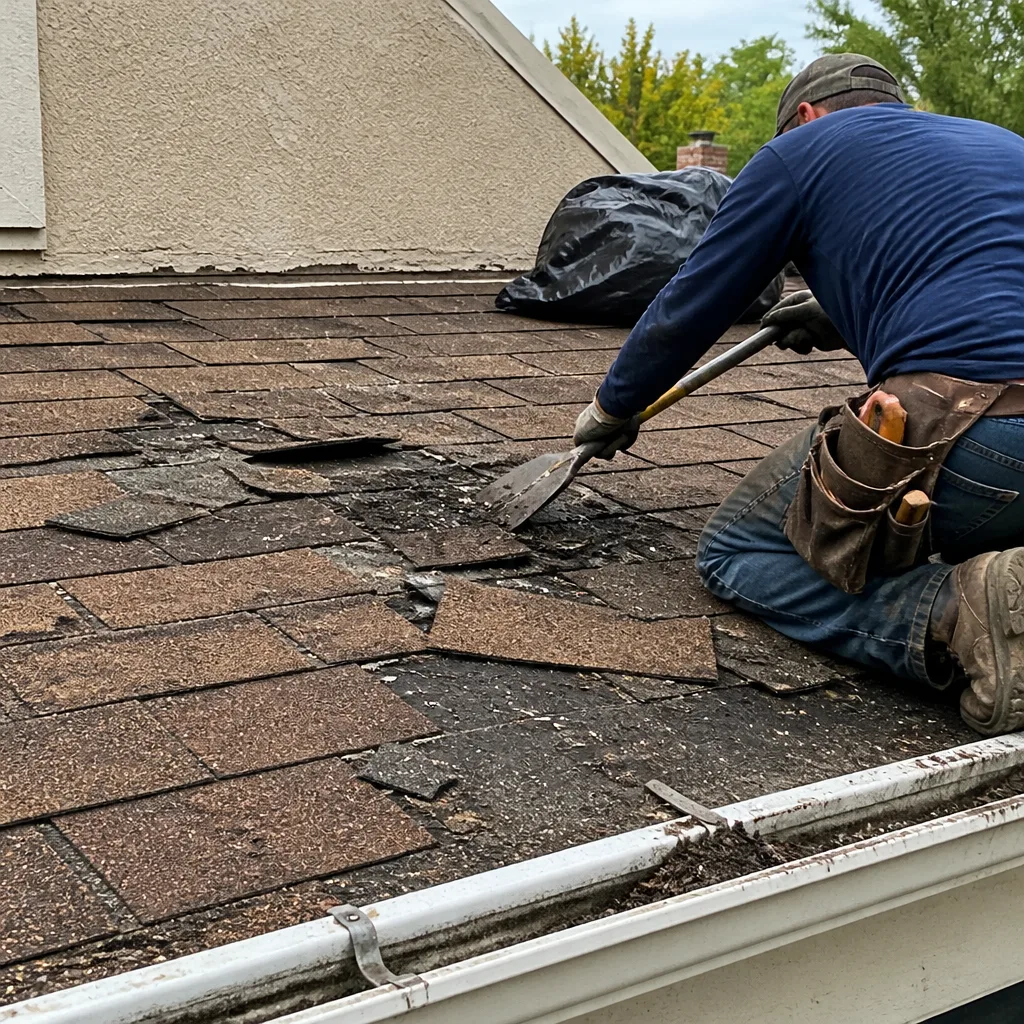 Before
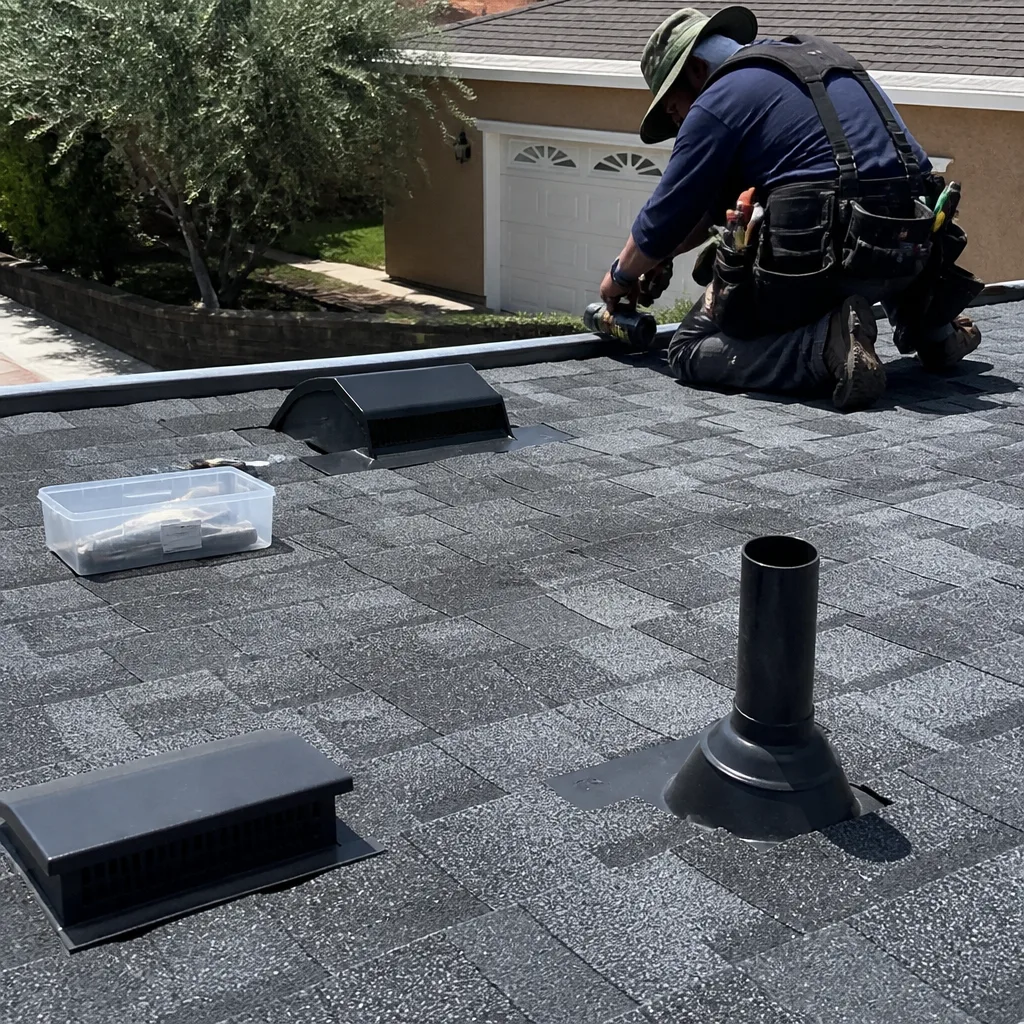 After
After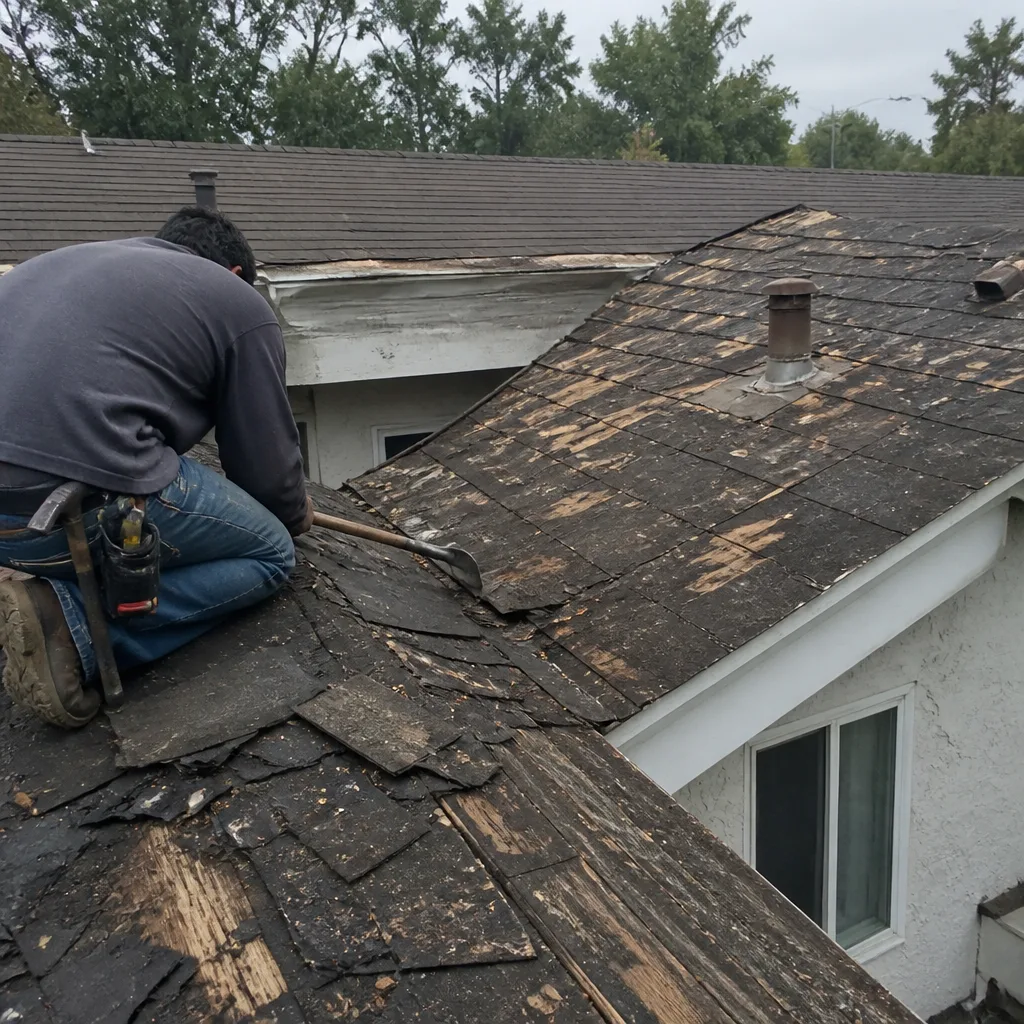 Before
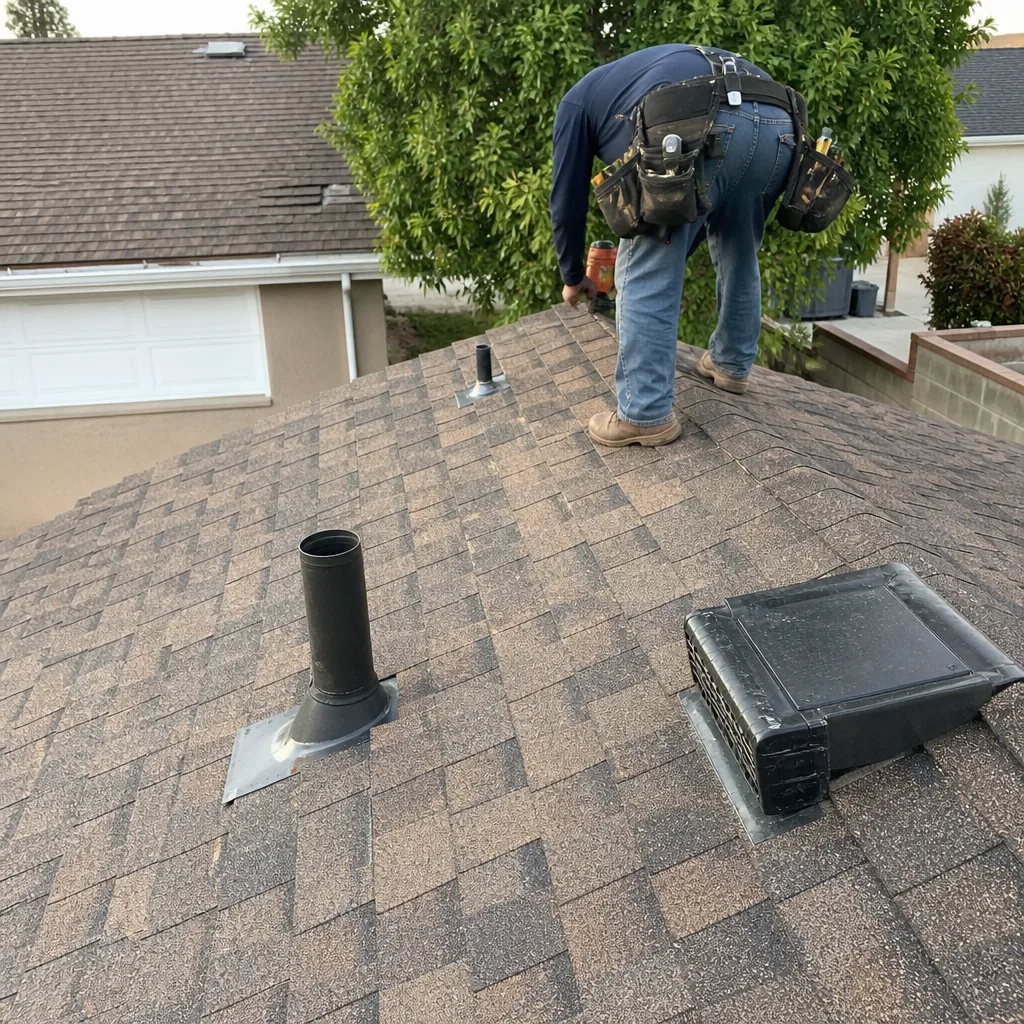 After
After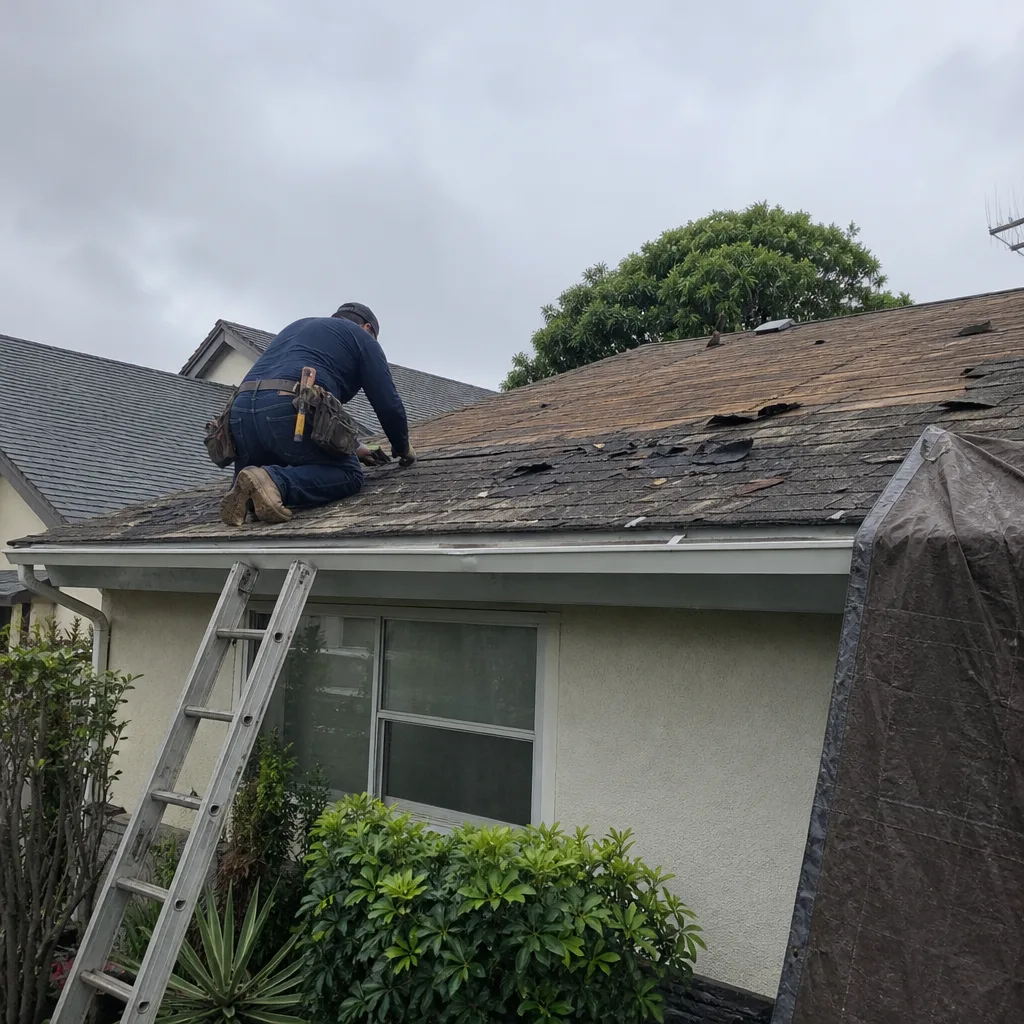 Before
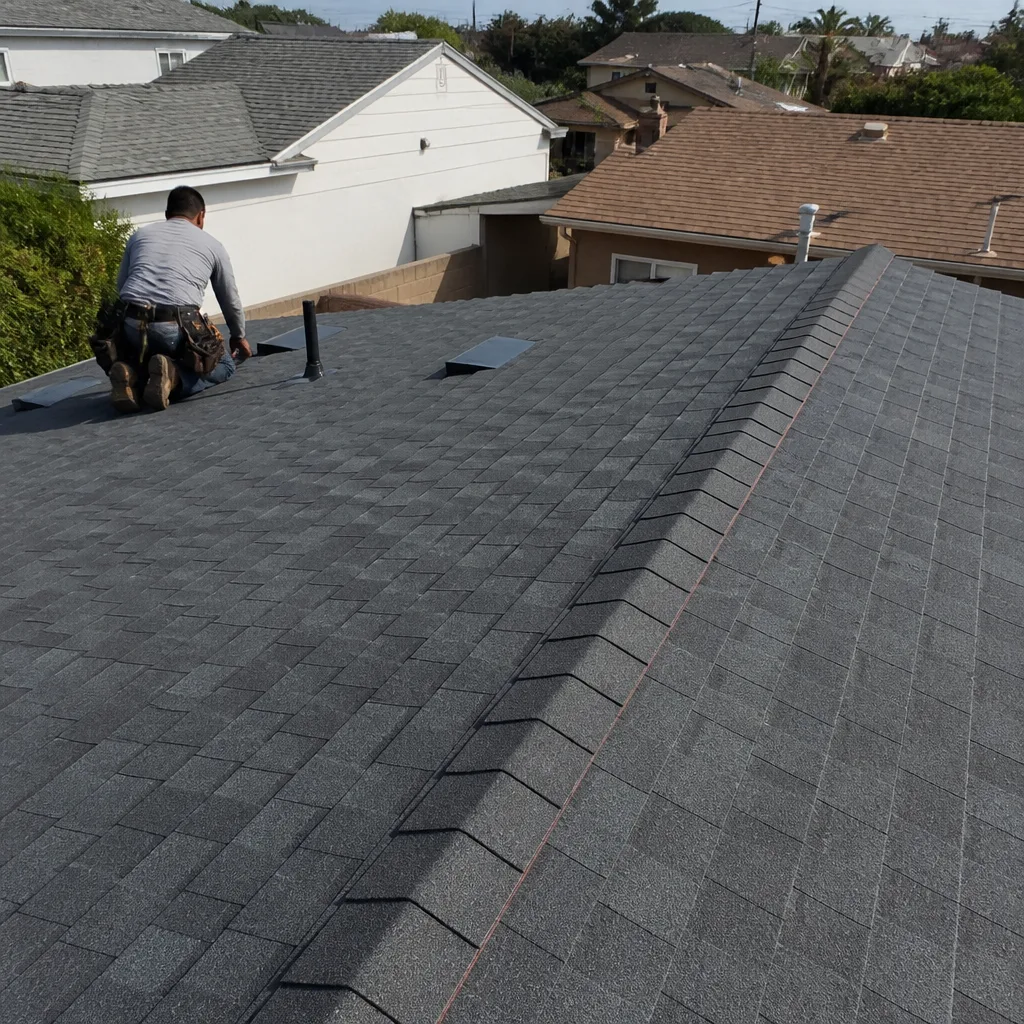 After
AfterWhen to Call a Professional
Some roofing situations are not DIY candidates under any circumstances. If you see water stains spreading across a ceiling, especially after heavy Torrance rain, the source may be a flashing failure, and it will not fix itself. Missing or cracked shingles after a Santa Ana wind event require attention before the next rain. Granule loss that leaves the shingle fiberglass mat exposed means the shingle is near the end of its life. Sagging roof planes suggest structural issues that require immediate professional evaluation. Slipped tiles on a tile roof are a repair job, not a ladder-and-patch job. Any time you’re considering climbing onto a roof on your own, consider the cost of the fall before the cost of the repair. Mercer Roofing Co Torrance offers free estimates in Torrance. Call (424) 435-5428 and a live person answers, 24/7.
Frequently Asked Questions
A typical Torrance reroof on a 1,400 to 1,800 square foot single-story home runs roughly $12,000 to $22,000, depending on shingle choice, tear-off requirements, decking condition, and permits. Repairs are much less: a flashing repair or small leak fix typically runs $350 to $900. Any bid significantly below the market range for a full reroof should be examined for material and labor shortcuts. Call (424) 435-5428 for an exact quote on your roof. Estimates are free.
A Torrance roofing contractor should hold either a California “B” general building license or a “C-39” roofing classification. The C-39 is the roofing-specific license and signals tested roofing competency. Always pull the full CSLB record, match the license holder’s name to the contract, and check the bonding and complaint history before signing anything.
Ask the company to send the technician’s name and photo before the visit. A reputable contractor provides this readily, along with a description of the vehicle and the identification the technician will present. At Mercer Roofing Co Torrance, every technician is background-checked, identity-verified, and photographed. We send the name and photo before the visit, and the technician presents a photo ID badge at the door.
No. Door-to-door roofers in the South Bay are disproportionately storm-chasers who appear after wind and rain events, create urgency, and vanish after payment. A legitimate Torrance roofer doesn’t need to canvas neighborhoods. If someone knocks uninvited claiming to have spotted roof damage, get their license number and verify it before allowing any inspection, or simply decline and call a local company you’ve independently vetted.
Under California law, a written estimate for a home improvement project must include the license number, full scope of work, specific materials with brand and model, total price, payment schedule, estimated start and completion dates, a three-day right-to-cancel notice, and a workers’ compensation disclosure. If any of these are missing, the estimate is incomplete, and the contractor knows it.
It shouldn’t, if the written estimate is precise about scope and decking assumptions. The legitimate reason a price changes mid-project is hidden decking damage discovered during tear-off, and a good estimate already addresses this by stating the per-sheet replacement price. A price that climbs because the contractor “forgot” to include something in the scope is a change order, and you should not sign it without understanding exactly what changed and why. At Mercer Roofing Co Torrance, a written price is provided before any work starts, and the price is fixed. Call (424) 435-5428 for an estimate with no surprises on the invoice.
The Bottom Line
Hiring a roofing contractor in Torrance is not a matter of picking the first name on Google or the lowest number on a bid. It’s a sequence of verifications: the full CSLB record, the workers’ comp confirmation, the write-it-down answers about subcontracting, the name-and-photo protocol before anyone arrives, and a written estimate that leaves no room for the price to wander. The roof over your Torrance home protects everything beneath it. The contractor you choose protects you during the project. Both deserve the same level of scrutiny. When you’re ready for a free written estimate, call Mercer Roofing Co Torrance home at (424) 435-5428. A live person answers. No voicemail, no call-back form, and no pressure, just a written price before the first nail is driven.
Written by Grant Whitlock, Owner at Mercer Roofing Co Torrance, serving Torrance since 2000.