
Last updated October 17, 2026
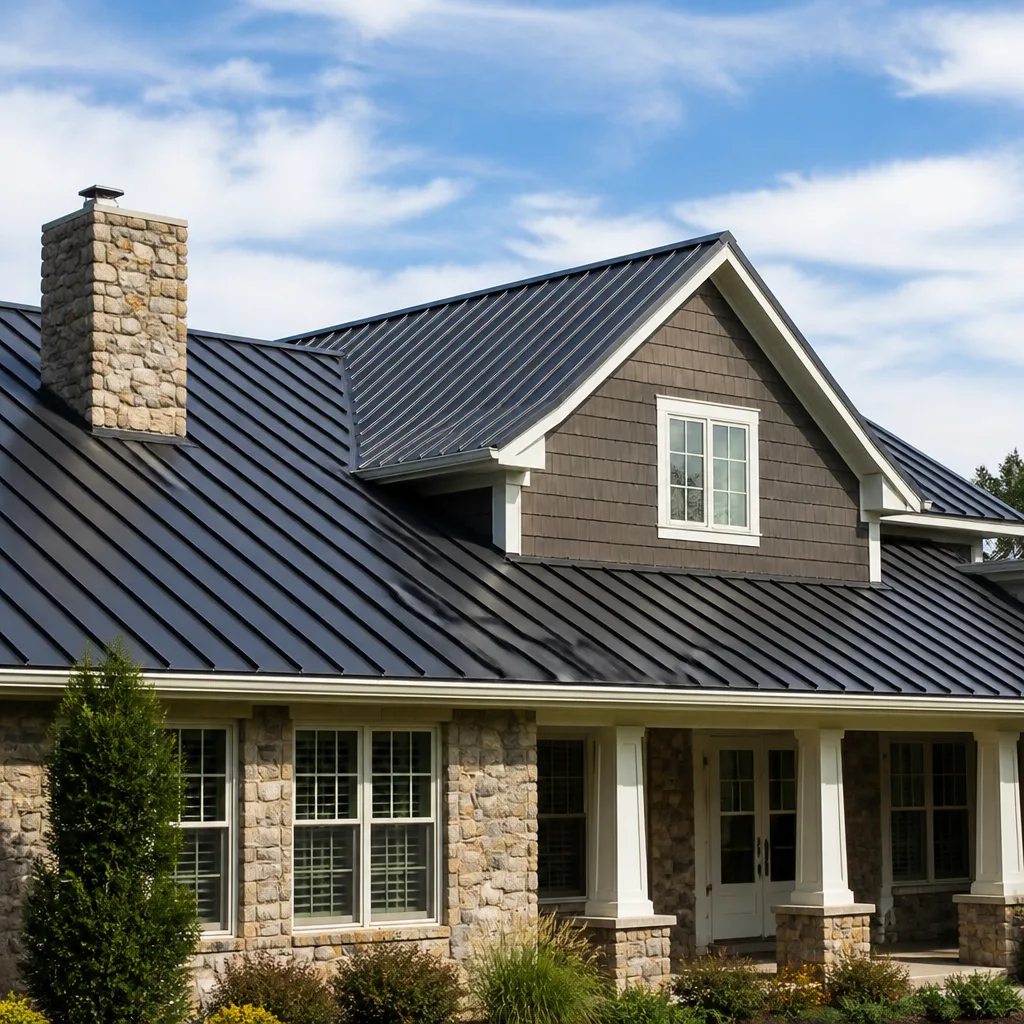 Metal roofing
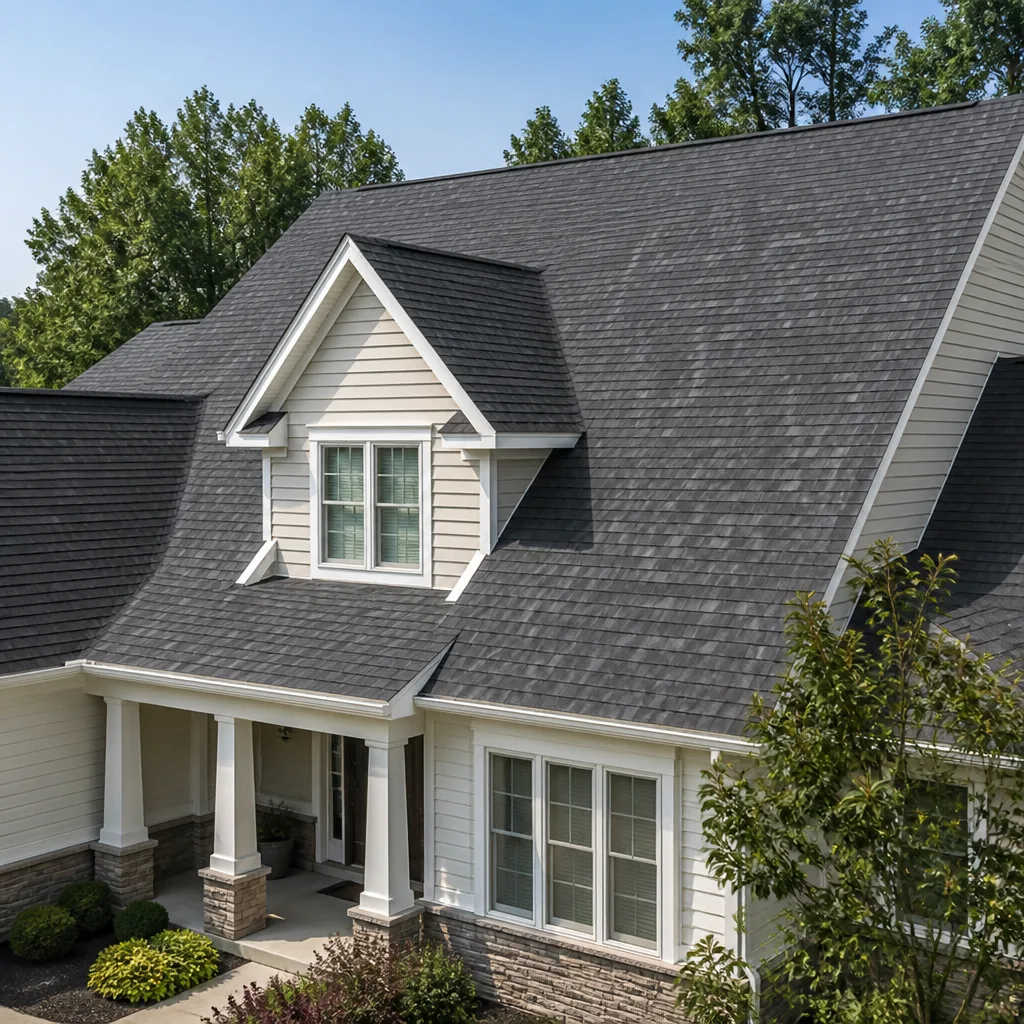 Architectural shingles
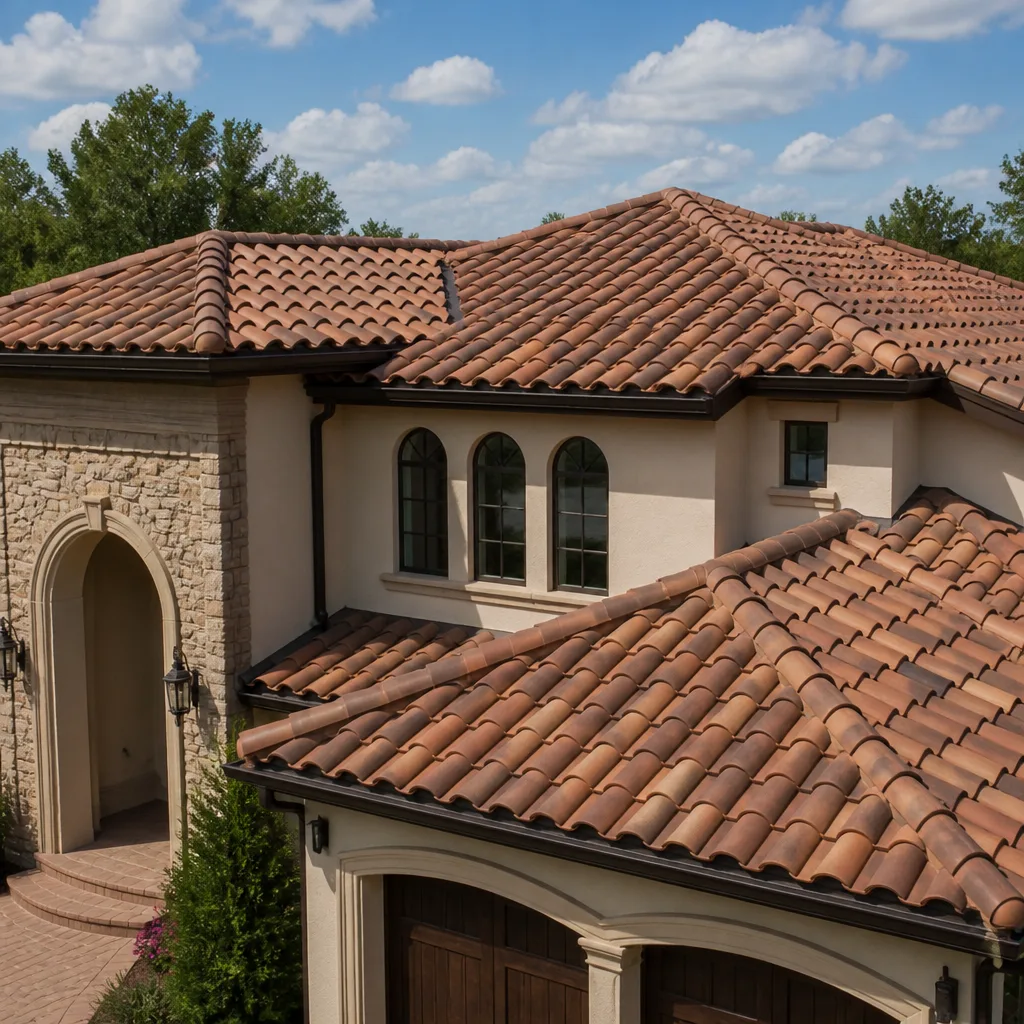 Tile roofing
 GAF
GAF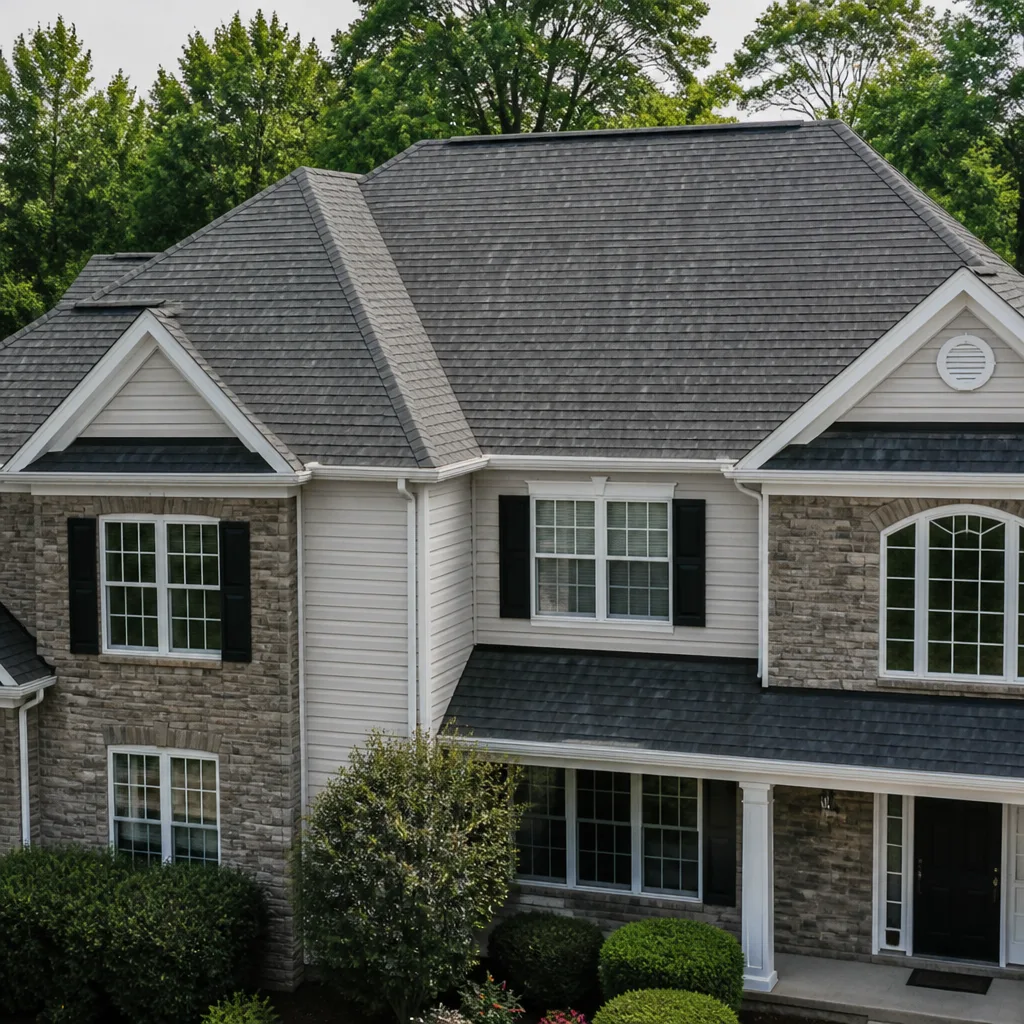 Owens Corning
 Flat & low-slope
Free roof inspection with deck photos before we talk money - GAF and Owens Corning certified installation
DIY vs Professional Roofing: The Torrance Homeowner’s Decision Guide
In California, the moment you sign an owner-builder permit for your own roof, you personally assume legal liability for anyone who steps onto it. That’s not buried in fine print. It’s the first thing the state wants you to understand. Yet most DIY roofing guides frame the decision as a simple math problem: material cost versus labor cost. For a Torrance homeowner, that framing misses the three costs that actually determine the outcome: your legal exposure, the warranty you forfeit, and the way salt air in the South Bay punishes a half-done repair. This guide draws the line where liability and coastal material science draw it, not where a YouTube tutorial does. By the time you’re done, you’ll know exactly which three tasks are genuinely DIY-safe in Torrance, which five repairs should never touch a weekend timeline, and what a contractor quote is actually paying for.
Styles & brands we work with
Quick Answer
Most Torrance roofing tasks that involve the roof’s waterproof surface are not DIY-appropriate. Gutter cleaning, visual inspection from an attic, and minor sealant touch-ups on isolated flashing points are the only three tasks we consider genuinely safe for a homeowner. Everything else, including shingle replacement, flashing repair, and any work that touches the roof’s underlayment or decking, carries permit triggers, warranty-voiding language, and personal liability exposure that outweighs any labor savings. Call a licensed contractor at (424) 435-5428 for a free estimate before you climb a ladder, or read our How to Hire a Roofing Contractor in Torrance: A Step-by-Step Guide first.
Table of Contents
- What California Law Actually Says About Homeowner Roofing
- Why Torrance Climate Makes Amateur Repairs Fail Faster
- The 3 Tasks That Are Genuinely DIY-Safe in Torrance
- The 5 Repairs You Should Never DIY
- What Signing an Owner-Builder Permit Actually Means for You
- Real Cost Comparison: DIY vs Professional in Torrance
- The Three Questions That Settle It
- Common Mistakes to Avoid
- When to Call a Professional
- Frequently Asked Questions
- The Bottom Line
What California Law Actually Says About Homeowner Roofing
California doesn’t prohibit you from working on your own roof. But it does something most homeowners don’t realize: it treats you exactly like a general contractor the moment you pull a permit. The California Contractors State License Board (CSLB) allows a person to act as an owner-builder under Business and Professions Code Section 7044, which permits you to build or improve a structure on your own property if you do the work yourself or hire licensed subcontractors. The catch is that the law was written for people doing real construction, not for a homeowner replacing a section of shingles. When you sign that owner-builder permit application, you are swearing, under penalty of perjury, that you are doing the work yourself or acting as the general contractor. If you hire a friend, a handyman, or an unlicensed crew to help, you become legally responsible for their injuries. If they fall and can’t work for a year, your homeowner’s insurance may reject the claim because the work wasn’t performed by a licensed contractor, and the injured person can come after your personal assets.
What’s more, California law now requires owner-builder permits to include a notice about workers’ compensation exposure. If someone helps you and they get hurt, and you didn’t carry a workers’ comp policy on them, you can be held personally liable for their medical bills and lost wages. That’s not a possibility. That’s the law. We mention this first because it’s the line that most cleanly separates what makes sense on a Saturday in Torrance from what belongs to a licensed contractor. The legal exposure isn’t proportional to the size of the repair. It’s proportional to whether you pulled a permit and whether anyone else gets on that roof.
Practical threshold: if the task requires removing or replacing any part of the roof membrane, it requires a permit in Torrance. If it requires a permit, it’s better handled by a licensed roofing contractor. That’s not a sales pitch. It’s what the Los Angeles County building code, which Torrance administers through its own Building & Safety division, expects from you. For smaller work, Torrance allows re-roofing and repair under a permit that specifies the materials, the nailing pattern, the underlayment, and the final inspection. The city will send an inspector to verify the work. If the inspector fails it, you redo it. That’s the real cost of the DIY route: the city becomes your quality control, and you’re the builder on record.
Why Torrance Climate Makes Amateur Repairs Fail Faster
Torrance sits in a coastal marine layer zone that most roofing guides never address. The air in the South Bay carries salt and persistent moisture from May through July, the infamous June Gloom, and the UV index is aggressive during the summer months when the marine layer burns off. A shingle in Torrance experiences thermal cycling every single day: morning fog and cool temps, afternoon sun, and then a rapid cool-down as the marine layer returns. That daily expansion and contraction stresses roofing materials in ways that inland homes, say in Riverside or San Bernardino, don’t experience. An amateur repair that uses the wrong sealant, or fails to lap flashing correctly, will open within a season or two. Not because the homeowner was careless. Because the coastal environment has a way of finding every shortcut.
Salt air is another factor. When you walk a roof in Torrance, you’ll see what we see regularly: galvanized flashing that’s corroded from repeated salt exposure, especially within a couple of miles of the water. An amateur who replaces a section of flashing with a hardware-store product that isn’t coastal-rated is setting up a faster failure. We’ve removed patches in South Torrance neighborhoods like Walteria and Seaside that were done with aluminum flashing from a big-box store, and the dissimilar-metal corrosion was already visible within eighteen months. The choice of metal matters. The choice of fastener matters. The compatibility of sealant with the existing roofing system matters. These are coastal considerations.
Then there’s the material compatibility issue. Torrance has homes built from the 1940s through the 2000s, and the roofing materials vary by era. A mid-century ranch in the Old Torrance area may have cedar shake under three layers of asphalt shingles. A 1990s tract home in Southwood may have a composition shingle system from a manufacturer that’s since changed its formulation. An amateur who buys a bundle of shingles that matches the color but not the brand, or the nail type, or the adhesive strip, creates a weak point that the next winter storm will find. The roof doesn’t care that the color matches. The roof cares about water entry points, and a mismatched seam is a water entry point.
The 3 Tasks That Are Genuinely DIY-Safe in Torrance
We’re not going to tell you that you should never touch your roof. That would be unrealistic and patronizing. There are three tasks we’ll tell you are genuinely safe and worthwhile to do yourself. All three keep your feet on the ground or your work limited to the safest, most isolated part of the roof. All three carry zero permit requirements. All three, done carefully, improve your home’s condition.
- Gutter cleaning and downspout flushing. This is ground-ladder work, which means you can learn to do it safely with the right ladder setup. You don’t need to walk the roof. You need a solid extension ladder, a helper, and a pair of gloves you don’t mind destroying. In Torrance, where eucalyptus and pine debris accumulate fast in the fall, keeping gutters clear is real preventive maintenance. A clogged gutter backs water up under the eave and into the fascia. That’s a water entry point that has nothing to do with the roof surface itself. This is the one task we’ll encourage you to do because it’s genuinely safe, genuinely useful, and genuinely within reach of most homeowners.
- Attic visual inspection after a rain. Go into your attic with a flashlight after the first heavy rain of the season. Look at the underside of the roof decking. You’re looking for water stains, dark streaking, or a musty smell that wasn’t there in August. You can also check for daylight coming through the decking, which indicates a gap in the roof surface or a failed vent. This is a diagnostic task, not a repair task, and it’s the single most useful thing a Torrance homeowner can do to catch a roof leak early. Write down what you saw, take photos, and if you find something, call a pro. This isn’t a task to fix from inside the attic. It’s a task to document.
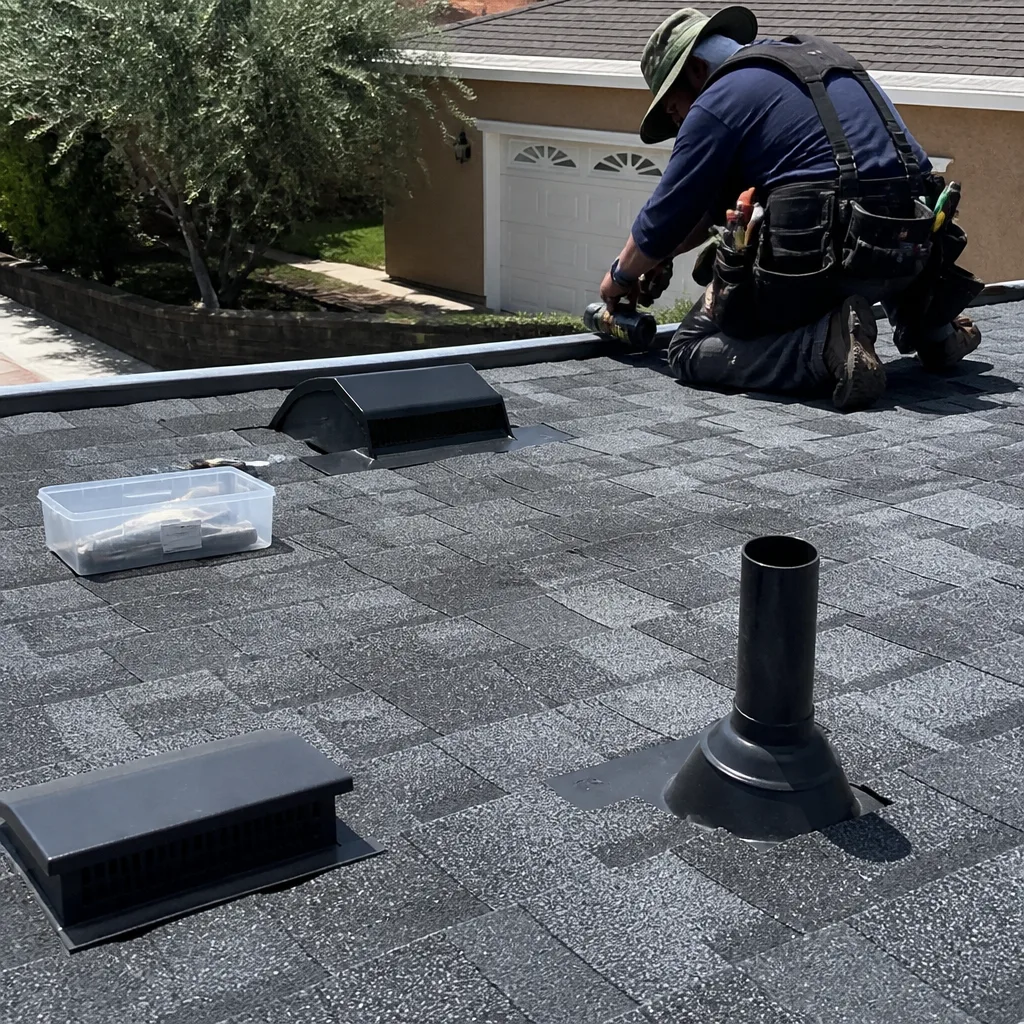
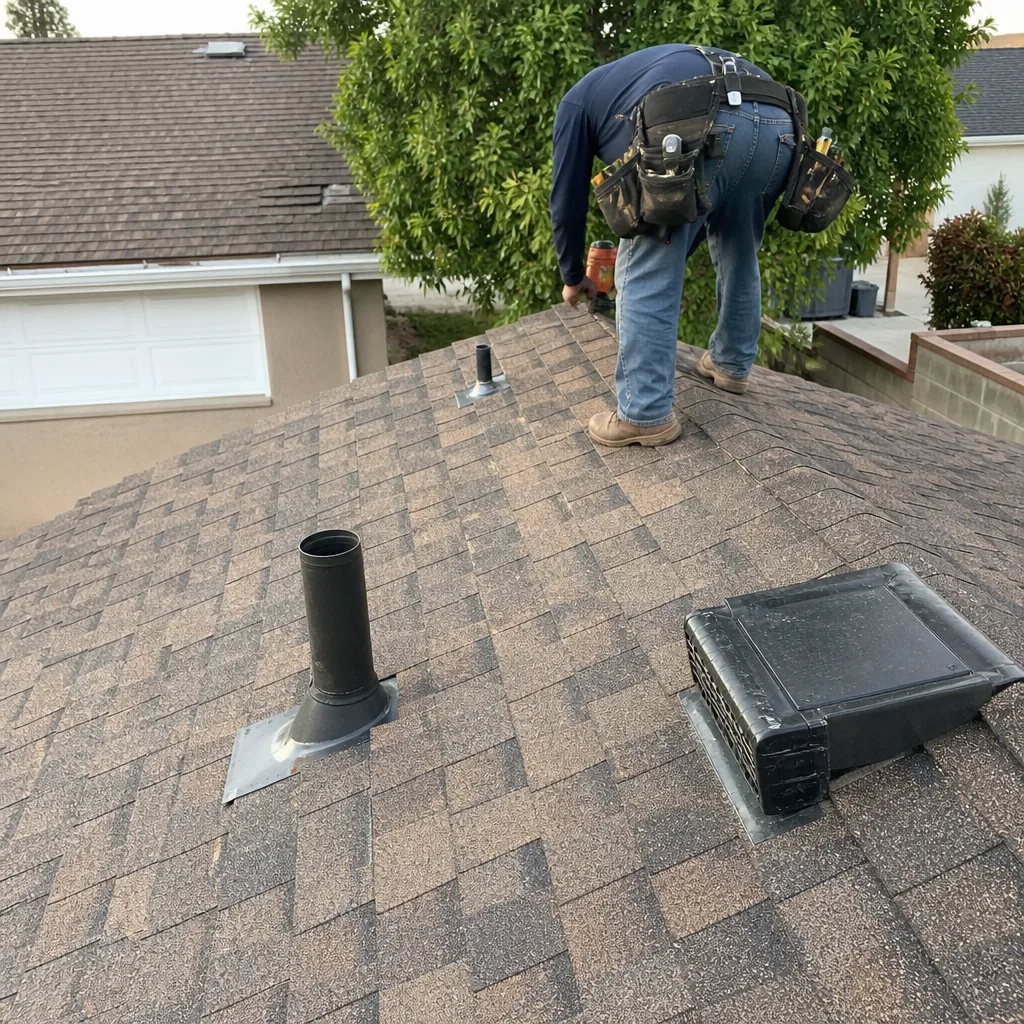
- Sealant touch-ups on isolated flashing points. This is the narrowest of the three. If you have a small pipe boot, a vent collar, or a step-flashing seam that shows a hairline crack in the sealant, you can sometimes clean the area and apply a bead of roof-compatible sealant. The emphasis is on “isolated” and “hairline.” This is not replacing the flashing. This is not caulking over a big gap. This is a temporary fix until a bigger repair happens. And even here, you need to know what sealant is compatible with your existing system. GAF, CertainTeed, and Owens Corning each have specific sealant and adhesive product lines that are approved for their shingles and accessories. Using the wrong one can void a manufacturer warranty on the surrounding material. When in doubt, don’t guess.
Everything else is beyond the DIY threshold. Not because you couldn’t physically do it. Because the consequences of a mistake, in this coastal climate, with these legal rules, are expensive.
The 5 Repairs You Should Never DIY
If it walks the roof surface and touches the waterproof membrane, it belongs to a licensed contractor. Here are the five repairs where the risk math always tilts professional. These are the calls we get most often after a homeowner has already tried and the fix didn’t hold.
1. Flashing replacement or repair
Flashing is the bent metal that protects the joints where the roof meets a wall, a chimney, a skylight, or a vent pipe. It’s also the most common point of roof failure in coastal climates because the sealant and the metal are under constant thermal and salt stress. Replacing flashing means lifting shingles, removing the old metal, possibly cutting new metal to spec, and re-installing the whole assembly. In Torrance, where the marine layer tests every joint, flashing work requires precise lapping and proper fastener selection. An amateur who nails through the wrong spot creates a new leak. We see this in neighborhoods like Hickory Park and Madrona all the time. It’s not a failure of craftsmanship. It’s a failure of the job being harder than it looks.
2. Shingle or tile replacement across a slope
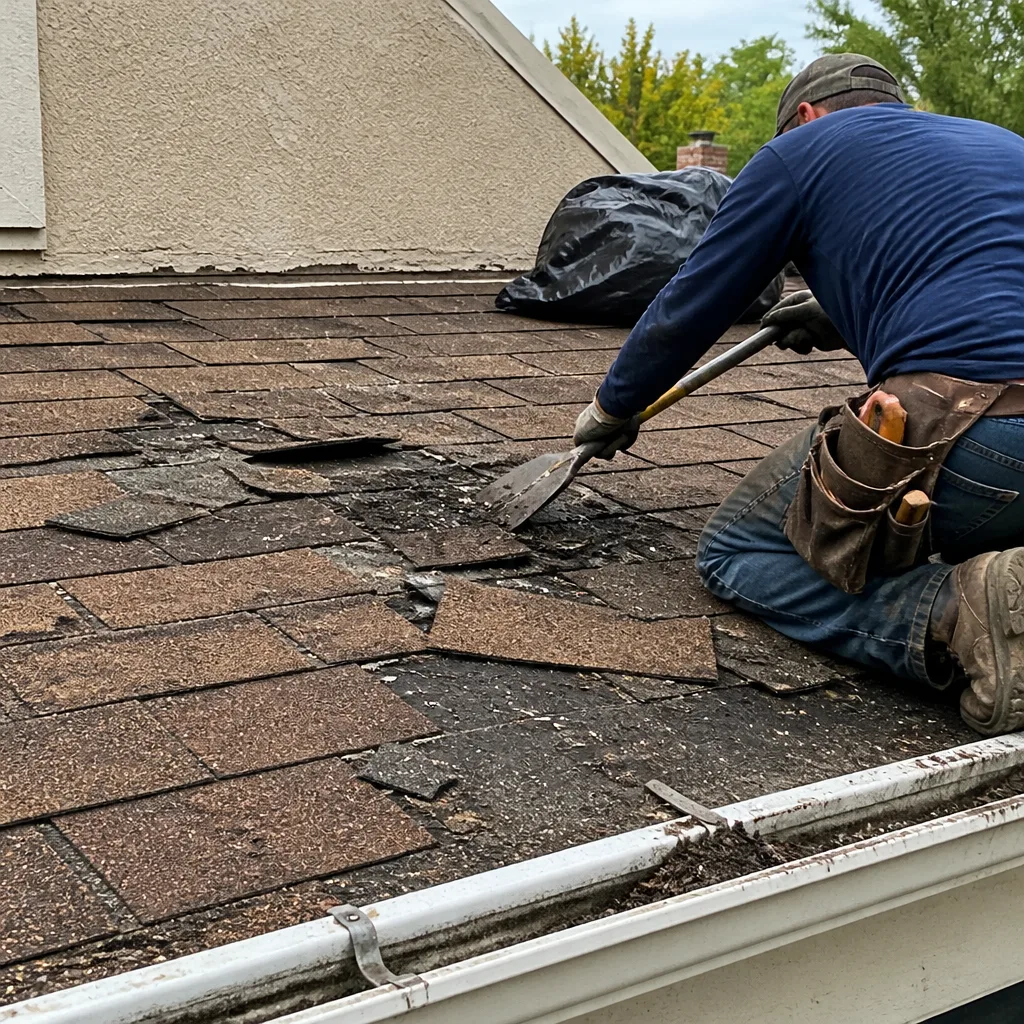
Replacing a single shingle is tempting. It’s cheap. It’s quick. But shingle removal requires you to break the adhesive seal on surrounding shingles, and if you don’t re-seal them correctly, or if you tear the shingle above, you’ve converted a small repair into a re-roof area. And when the shingles are still under manufacturer warranty, unauthorized repairs void the warranty outright. Brands like GAF and Owens Corning publish detailed installation instructions, and a key line in most warranty documents is that the work must be performed by a qualified roofing contractor. The moment you pop those nails and a warranty adjuster can prove it, the warranty’s gone.
3. Underlayment or decking repair
Underlayment is the waterproof layer between the shingles and the plywood decking. You can’t see it from the ground, and if you haven’t pulled the shingles off, you don’t know if it’s torn, saturated, or dry-rotted. But if water has been getting in, the underlayment is the first thing to fail. And if the decking underneath is rotten, the repair is structural. This is not a weekend job. This is a tear-off, decking replacement, new underlayment, new shingles, new fasteners, and a city inspection. If you’ve never seen a roofing crew tear off a roof in Torrance, this is what it looks like: a full day of labor, a dumpster, a nail gun or three, and a second day for installation. Up on the roof, it feels even bigger. This is contractor work.
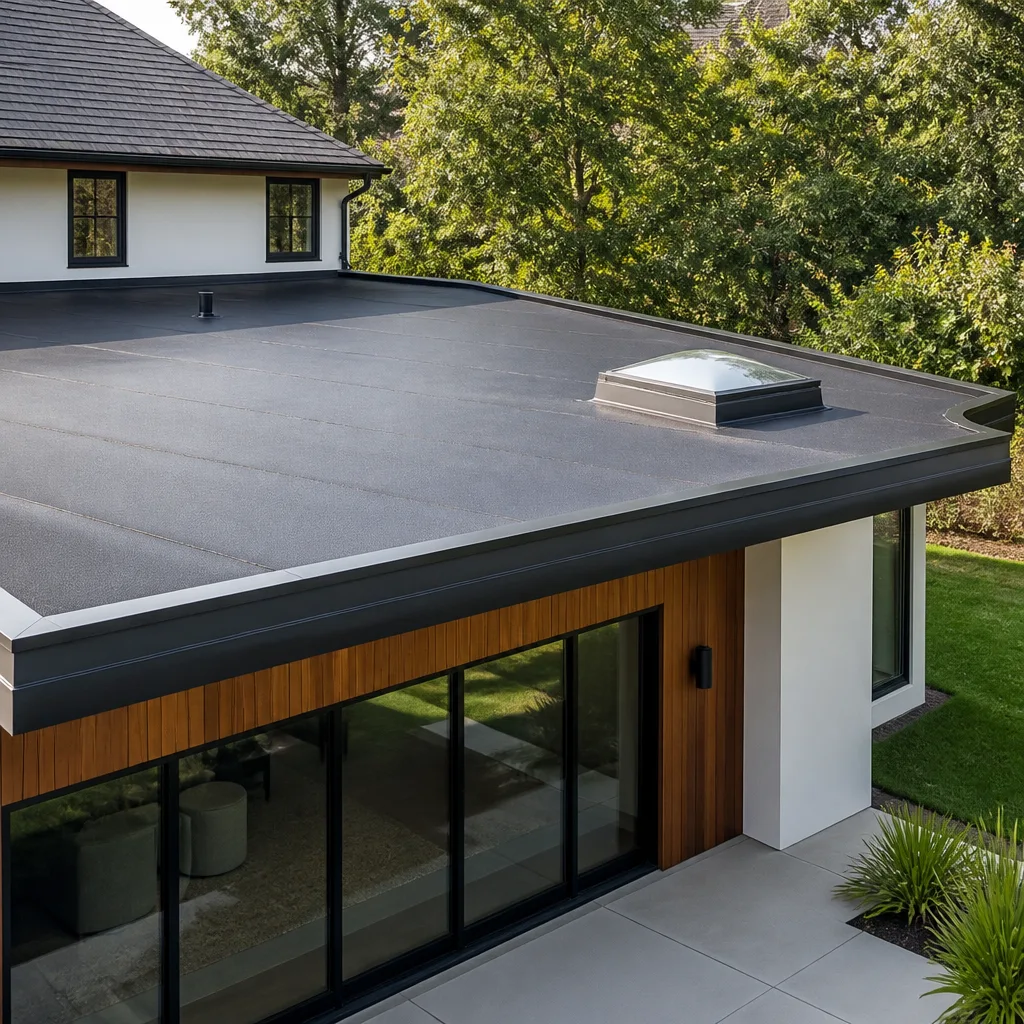
4. Flat roof or low-slope roof repair
Some Torrance homes have flat or low-slope roofs, especially the mid-century moderns and the commercial-to-residential conversions in the downtown corridor. Flat roofs use different materials: modified bitumen, TPO, or PVC membrane. These systems are sealed with heat welding or adhesives. They require special tools and a trained hand. A homeowner with a bucket of roof cement and a paint roller is not going to create a watertight seal on a TPO seam. They’re going to create a patch that peels up with the first good wind, and then the leak is bigger. Flat roofs are the one place where even small “touch-ups” really belong to a pro. The materials alone are specialized enough that a general hardware store won’t carry the right product.
5. Any repair that requires removing more than one layer of material
If your repair plan involves “I’ll just peel back these shingles and see what’s underneath,” stop. The moment you remove multiple layers of roofing material, you’ve committed to a re-installation job that needs to be done right. And in Torrance, any re-roof or repair that involves more than a certain square footage triggers a permit. The city will want to see material specifications, fastener types, and an inspection. Pulling your own permit on a job like this puts you in the owner-builder liability zone we described earlier. That’s the line. If you’re peeling layers, you’ve crossed it.
What Signing an Owner-Builder Permit Actually Means for You
Let’s get concrete about the owner-builder permit because it’s the part of DIY roofing that California homeowners underestimate the most. When you walk into the Torrance Building & Safety permit counter and ask for an owner-builder permit for a roof, you’re signing a legal document that says you are the contractor. Not just metaphorically. Legally. You are assuming the responsibility of a general contractor under the California Contractors State License Board. That means if anyone helps you, even a neighbor who comes over to hand you shingles, and that person falls off the ladder, you can be sued. The permit application includes a notice that you, the owner-builder, are responsible for obtaining workers’ compensation insurance for anyone you hire or use to help. Most homeowners don’t know this until they’re signing the form.
The liability isn’t limited to injuries. If the work fails, and the insurance company later determines that the roof replacement was done by an unlicensed owner-builder, they can deny a subsequent claim for water damage. Even if the leak is from a different area of the roof. Even if you sold the home and the new owner files the claim. The paper trail follows the roof.
Then there’s the resale issue. When you sell a Torrance home, you must disclose any work done under an owner-builder permit. The buyer’s home inspector, the buyer’s insurer, and the buyer’s lender will all look at that disclosure. A roof that was replaced by an owner-builder is a red flag for many buyers. Not because most owner-builders do shoddy work. Because most homeowner insurance policies don’t cover claims arising from owner-builder defects. A roof replaced by a licensed contractor with a written warranty is a selling point. A roof replaced by the previous owner is a liability asterisk. For most Torrance homeowners, that resale consideration alone makes the professional route the sound financial choice, even before you factor in the cost of materials and the risk of injuries.
Real Cost Comparison: DIY vs Professional in Torrance
Let’s talk about actual dollars. The DIY argument usually assumes that you save the labor cost. But in roofing, the labor cost is the only part that comes with a warranty. When you factor in the cost of redoing a failed DIY repair, the math flips. Here’s a real cost comparison for five common Torrance repair scenarios, based on what we see on quotes across the South Bay and what local material suppliers charge a homeowner walking in off the street.
Scenario 1: Replace 3 – 5 damaged composition shingles.
- DIY: Materials ($30 – 50 for a bundle of shingles, $10 – 15 for a coil of nails, $20 – 40 for tube sealant and a shingle bar) = $60 – 105 in materials, plus 2 – 3 hours of your time. Risk: breaking the seal on adjacent shingles, mismatching the shingle brand, voiding a manufacturer warranty.
- Professional: $250 – 500 flat rate for a small shingle repair. Includes materials, labor, a written guarantee, and no warranty voiding on the surrounding roof.
- Hidden DIY cost: If the surrounding shingles don’t re-seal, or you tear one, the professional remediation cost is $800 – 1,500 because the whole slope now needs attention.
Scenario 2: Replace a damaged pipe boot or vent collar.
- DIY: $15 – 45 for a new pipe boot or vent collar from a roofing supply house. Plus a tube of sealant at $8 – 15. Time: 1 – 2 hours.
- Professional: $200 – 400. Includes removal, inspection of the surrounding shingles, new flashing installed to manufacturer spec, and a written repair guarantee.
- Hidden DIY cost: If the pipe boot you buy is incompatible with the existing flashing type, or you nail it wrong, the leak continues. The professional call you make a month later costs the full $200 – 400 anyway. You didn’t save $200. You spent $50 and still paid the $200.
Scenario 3: Gutter cleaning (safe DIY) vs professional gutter service.
- DIY: $0 in materials if you have a ladder and a bucket. Time: 2 – 3 hours for a typical Torrance single-story home. This is a clear DIY win.
- Professional: $150 – 350 depending on linear feet and whether downspouts need flushing.
- The honest take: This is the one task where we’ll tell you to DIY it if you trust your ladder skills. You can spend the $300 you save on a family dinner in Old Torrance.
Scenario 4: Small flashing repair at a chimney or wall intersection.
- DIY: $40 – 80 in materials if you guess right. Time: 3 – 4 hours. Risk: Very high. You’ll be handling metal, lifting shingles, and trying to solve a 3D waterproofing problem with no experience.
- Professional: $450 – 900 depending on the size of the flashing. Includes metalwork, proper lapping, sealant based on the existing system, and a 365-day guarantee.
- Hidden DIY cost: Chimney flashing done wrong leaks into the structure, not just the attic. We’ve seen $10,000+ in interior drywall and beam damage from a chimney flashing failure that started as a $50 DIY attempt. That’s the real cost of the “save.”
Scenario 5: Full tear-off and re-roof.
- DIY: Materials only (shingles, underlayment, decking replacement, dumpster, disposal fees) can run $12,000 – 18,000 on a 1,800 sq ft Torrance home. Equipment rental: another $500 – 800. Plus a permit. Plus your own liability. Plus 3 – 4 weekends.
- Professional: $25,000 – 40,000 depending on the home’s size, pitch, material choice, and access. Includes permit, labor, materials, disposal, warranty, and insurance.
- Hidden DIY cost: The entire risk. A full re-roof isn’t a repair scenario, it’s a construction project. The owner-builder liability we’ve been describing applies at max scale.
The takeaway: on small, isolated, surface-level repairs, the DIY savings is real but so is the redo risk. On flashing, underlayment, and full re-roofs, the DIY route is a financial gamble with poor odds. Mercer Roofing Co Torrance includes a written price before any work starts, so you’ll know exactly what the professional route costs before you commit to anything. Call (424) 435-5428 for a free estimate.
The Three Questions That Settle It
When a Torrance homeowner calls us and asks whether they should attempt a repair themselves, we give them three questions. Answer them honestly, and the decision makes itself.
- Is the repair limited to the surface, or does it touch the waterproof system? If you’re cleaning gutters, you’re on the surface. If you’re lifting shingles, replacing flashing, touching underlayment, or opening the roof membrane, you’re in the waterproof system. System work is professional work.
- Is the existing roof under a manufacturer warranty, and would an unauthorized repair void it? If your shingles are GAF, CertainTeed, Owens Corning, or IKO, and the roof is less than 15 years old, there’s a good chance the materials are still covered. Reading the warranty fine print will show that most manufacturer warranties require installation by a qualified contractor. Amateur work is often grounds for warranty denial, not just on the repaired area, but in some cases on the entire roof. Torrance has thousands of homes with roofs that were re-done in the last 10 – 15 years. Your warranty is an asset. Don’t torch it to save $200.
- Would the repair require a permit in Torrance? Anything beyond cosmetic repair generally does. The city’s permit requirements track closely with what the building code considers “re-roofing” versus “maintenance.” If you need a permit, you need a contractor, or you need to accept personal liability as an owner-builder. There’s no fourth option.
If the answer to questions 1 or 3 is “yes,” the professional route is the only route that doesn’t expose you to legal and financial risk. It’s not about skill. It’s about liability.
Common Mistakes to Avoid
- Using the wrong sealant and calling it good. Roofing sealants are not interchangeable. A silicone caulk from the hardware store is not the same as a shingle-approved adhesive. In Torrance’s coastal environment, the wrong sealant can crack within months. If you’re going to touch sealant at all, match it to the existing material system.
- Nailing through the wrong part of the shingle. Shingle installation requires nails at the correct height, the correct angle, and the correct penetration. An amateur nail job leaves exposed heads that become rust points and water channels. This is one of the most common failures we see on DIY repairs in Torrance neighborhoods like Seaside and Southwood.
- Mismatching shingle brands or colors across an existing slope. The color may match on the ground. The weight, the adhesive strip, the nail zone, and the wind rating may not. A mismatched patch on a slope is a weak point that the next Santa Ana wind will exploit.
- Walking a roof without proper footwear and fall protection. A sloped composition roof in the morning marine layer is slick. We’ve had homeowners tell us they “carefully walked” a 6/12 pitch in sneakers. That’s not careful. That’s lucky. Fall injuries from roofing are among the most severe home injuries. If the roof is steep enough to require a harness, you shouldn’t be on it.
- Underestimating how long a “quick” repair actually takes. A homeowner starts a “two-hour” flashing repair at noon. At 4 p.m., it’s torn apart and it’s getting dark. The marine layer rolls in. The roof is now exposed to overnight moisture. The repair now has to be done by a professional, and it’s more expensive than if you’d called one in the first place.
- Assuming homeowner’s insurance covers DIY roof work. It may not. Many policies contain clauses about unpermitted work or work performed by the homeowner. If a leak originates from a DIY repair and causes interior damage, the claim can be denied. You’re not just risking the roof. You’re risking everything under it.
When to Call a Professional
If your repair involves flashing, shingles across a slope, underlayment, decking, or any part of the roof’s waterproof system, call a licensed contractor. If you’ve found water in your attic, don’t climb up to “find the leak.” Call someone who can track the leak and fix it correctly. If your roof is under warranty, do not touch it. If your roof requires a permit, do not pull it yourself. If you’re reading this and still unsure, Mercer Roofing Co Torrance offers free estimates in Torrance, and a live person answers the phone 24/7 at (424) 435-5428. We cover Roof Repair in Torrance, Roof Installation in Torrance, and full Roofing Company in Torrance services. Every project begins with a written price. Every repair includes a written guarantee. You’ll know exactly what you’re getting before anyone touches your roof.
Frequently Asked Questions
Yes, California law allows a homeowner to act as an owner-builder on their own property, including roofing work, provided the work meets Torrance building codes and you pull the required permits. The underlying legal reality is that pulling an owner-builder permit makes you personally liable for injuries to anyone who helps with the work. For small, non-structural tasks like gutter cleaning or attic inspection, no permit is required and the work is firmly in the legal DIY zone. Anything beyond that belongs to a licensed contractor. Call Mercer Roofing Co Torrance home at (424) 435-5428 to find out where your repair falls.
Any repair that involves removing or replacing part of the roof’s waterproof system generally requires a permit in Torrance. That includes shingle or tile replacement beyond a few units, underlayment replacement, decking repair, and all flashing work that requires lifting the roof surface. The city’s Building & Safety division wants to inspect the work to ensure it meets code. A licensed contractor pulls this permit on your behalf. A DIY homeowner pulls it as an owner-builder and accepts the legal consequences. If you’re unsure whether your repair crosses the permit threshold, consult our Roof Repair Maintenance Checklist for Torrance Homeowners or call a roofer and ask, most will tell you over the phone.
In most cases, yes. Manufacturer warranties from GAF, CertainTeed, Owens Corning, and IKO typically include language requiring that the shingles be installed by a qualified contractor according to the manufacturer’s published installation instructions. Unauthorized repairs, especially those that alter the nail pattern, use incompatible sealants, or replace individual shingles with a different brand, are common grounds for warranty denial. The warranty doesn’t just cover the patch. It can be voided for the entire roof if the manufacturer determines that unauthorized work compromised the system. If your Torrance roof is still under warranty, treat it as an asset you don’t want to lose.
Small repairs in Torrance typically run $250 to $900 depending on the scope. A shingle replacement is on the low end. A flashing repair at a chimney or wall intersection is on the higher end. More extensive repairs, like underlayment work or a partial re-roof, run higher. That price includes the contractor’s insurance, the permit when required, the disposal of old materials, and, critically, the warranty. Mercer Roofing Co Torrance includes a written price before any work starts and a written guarantee on every repair. Call (424) 435-5428 for an exact quote, estimates are free.
You can, and many Torrance homeowners try. The patch will likely fail within a season or two because roof cement doesn’t address the underlying cause of the leak. Water doesn’t enter where the shingle looks damaged. It enters where the flashing failed, where the underlayment tore, or where a nail popped. Roof cement over the visible damage temporarily slows the leak but doesn’t stop the water from spreading between layers. And when the patch peels, which it will in the marine-layer climate, the leak is back. The professional approach is to find the actual entry point and repair that. A free estimate is a phone call away.
If the repair is done by a licensed contractor that includes a written guarantee, you call them back and they fix it. Mercer Roofing Co Torrance includes a 365-Day Done Right Promise with every job: if the work is not right within a year, Mercer makes it right. Every repair is backed by a written guarantee, and a free second visit is included if the repair fails. When you DIY a repair and it fails, the second visit is you, back on the ladder, with more money in materials, and a bigger problem. That’s the difference in one paragraph.
The Bottom Line
The DIY vs professional roofing decision in Torrance isn’t about whether you can climb a ladder. It’s about whether you want to sign papers that make you legally responsible for everything that happens on the roof, whether you’re comfortable voiding a manufacturer warranty to save a few hundred dollars, and whether the repair touches the waterproof system that protects your home. In coastal Torrance, salt air, UV, and daily thermal cycling will find every shortcut. Gutter cleaning, attic inspection, and the narrowest sealant touch-ups are the only tasks we consider genuinely DIY-safe. Everything else carries risk that the savings don’t justify. For more guides & resources, visit our blog. Mercer Roofing Co Torrance offers free estimates, written prices before any work starts, and a written guarantee on every repair. Call (424) 435-5428 if you’d rather leave the roof to someone who does it every day.
Written by Grant Whitlock, Owner at Mercer Roofing Co Torrance, serving Torrance since 2000.
See the difference
 Before
 After
After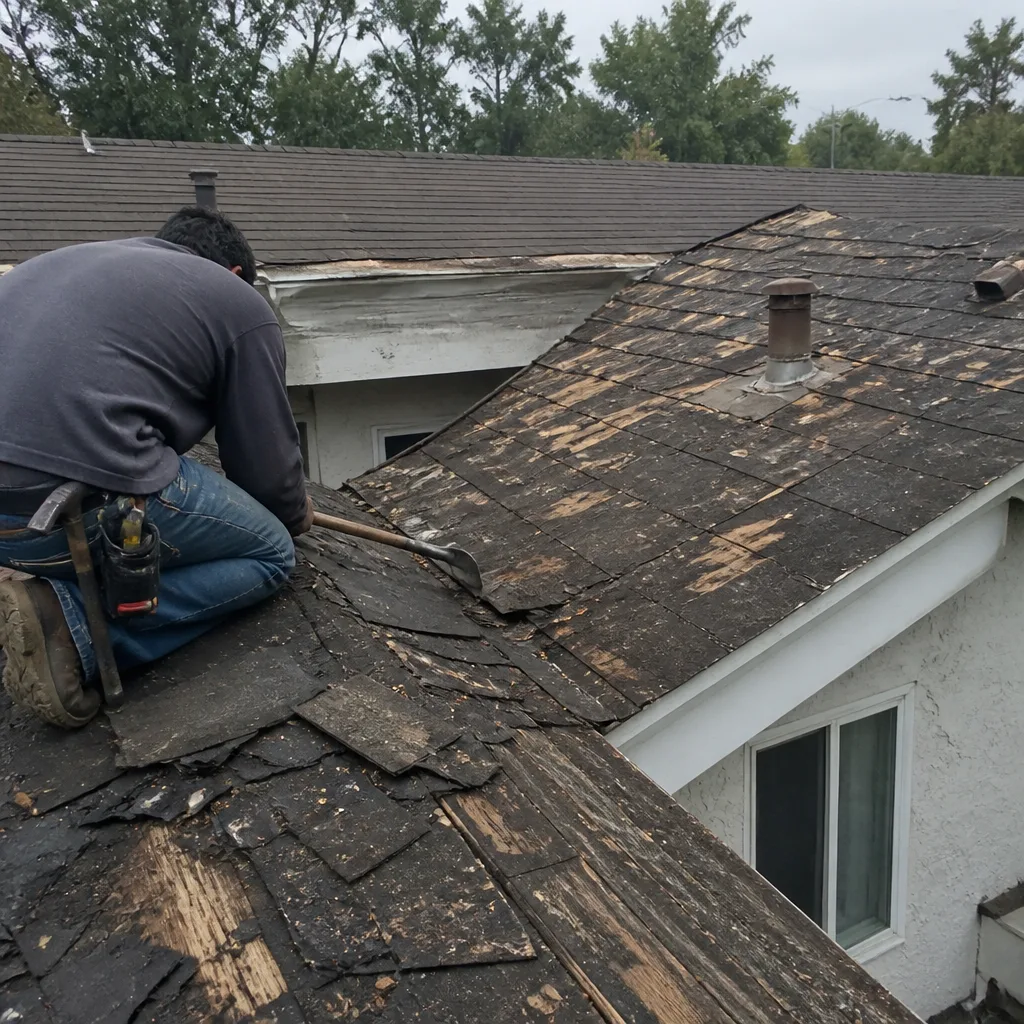 Before
 After
After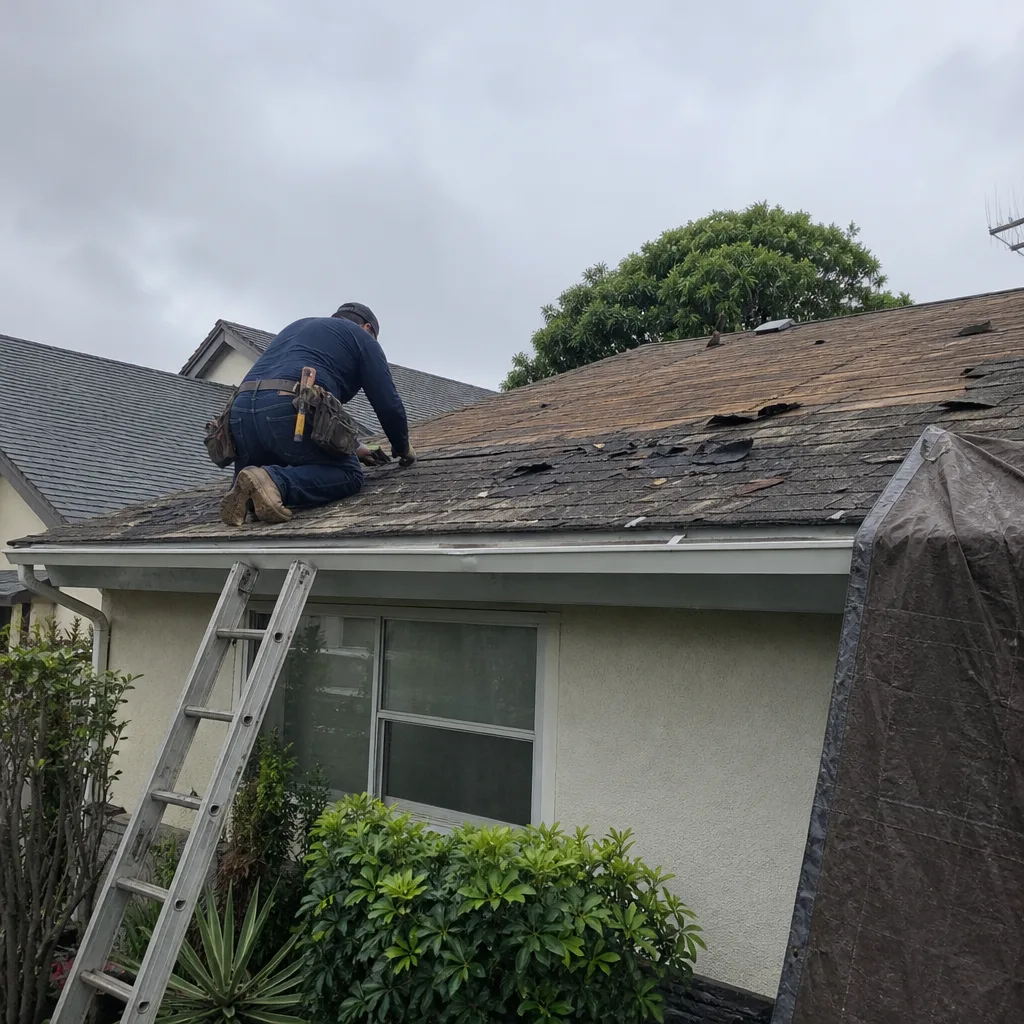 Before
 After
After