
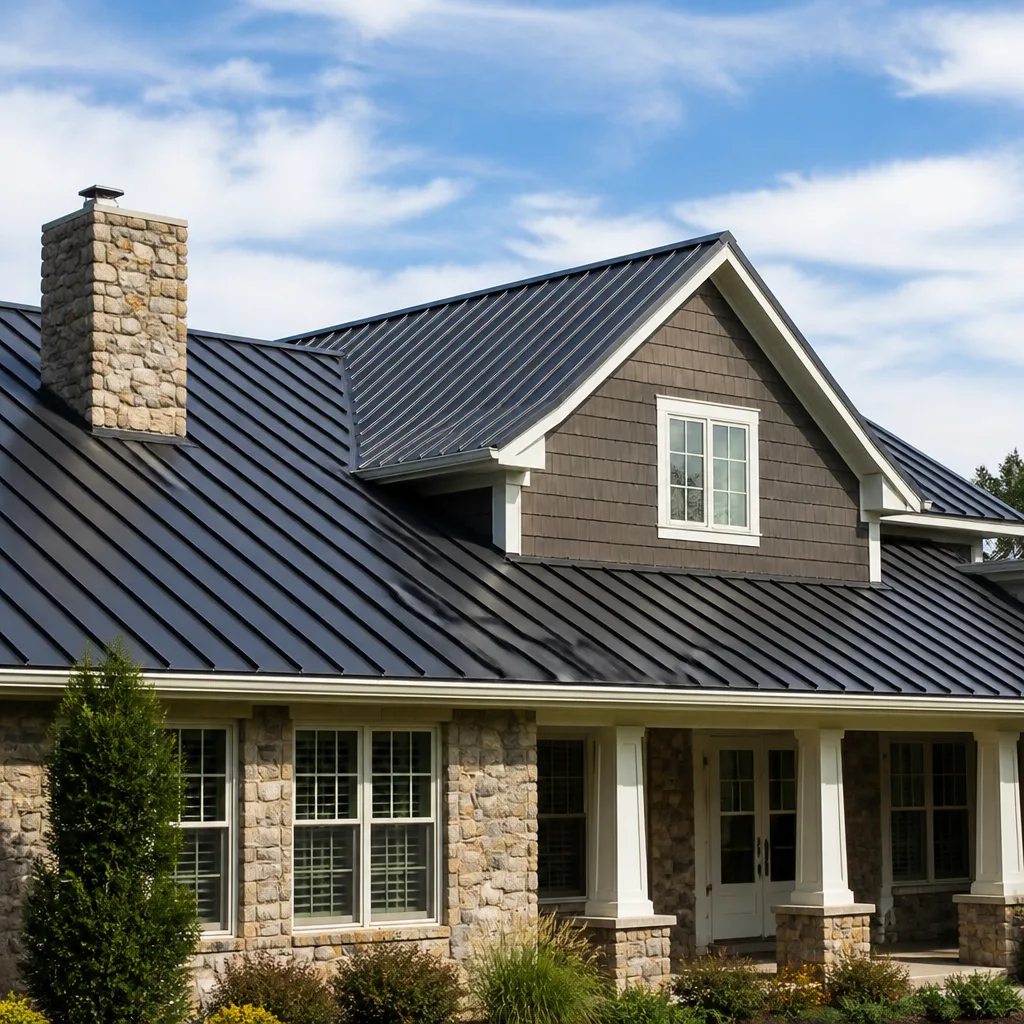
 Metal roofing
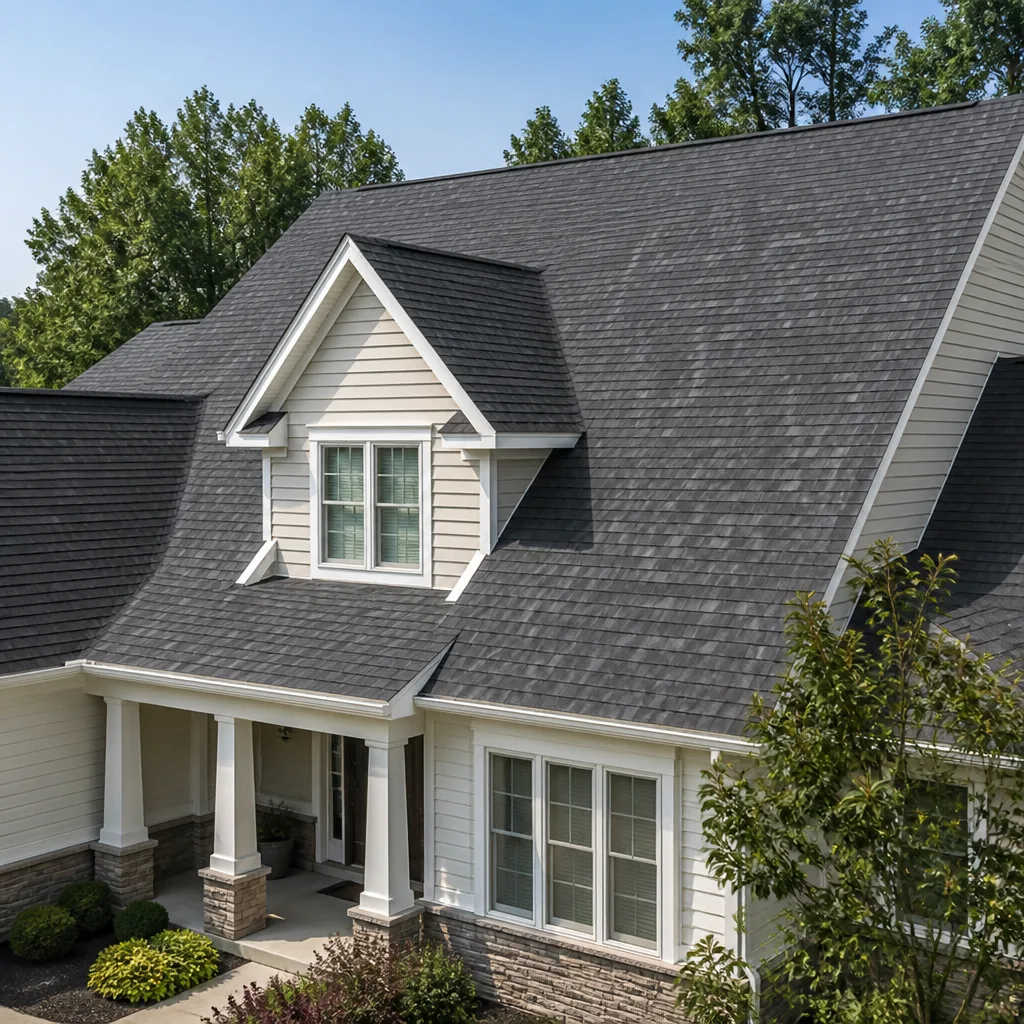 Architectural shingles
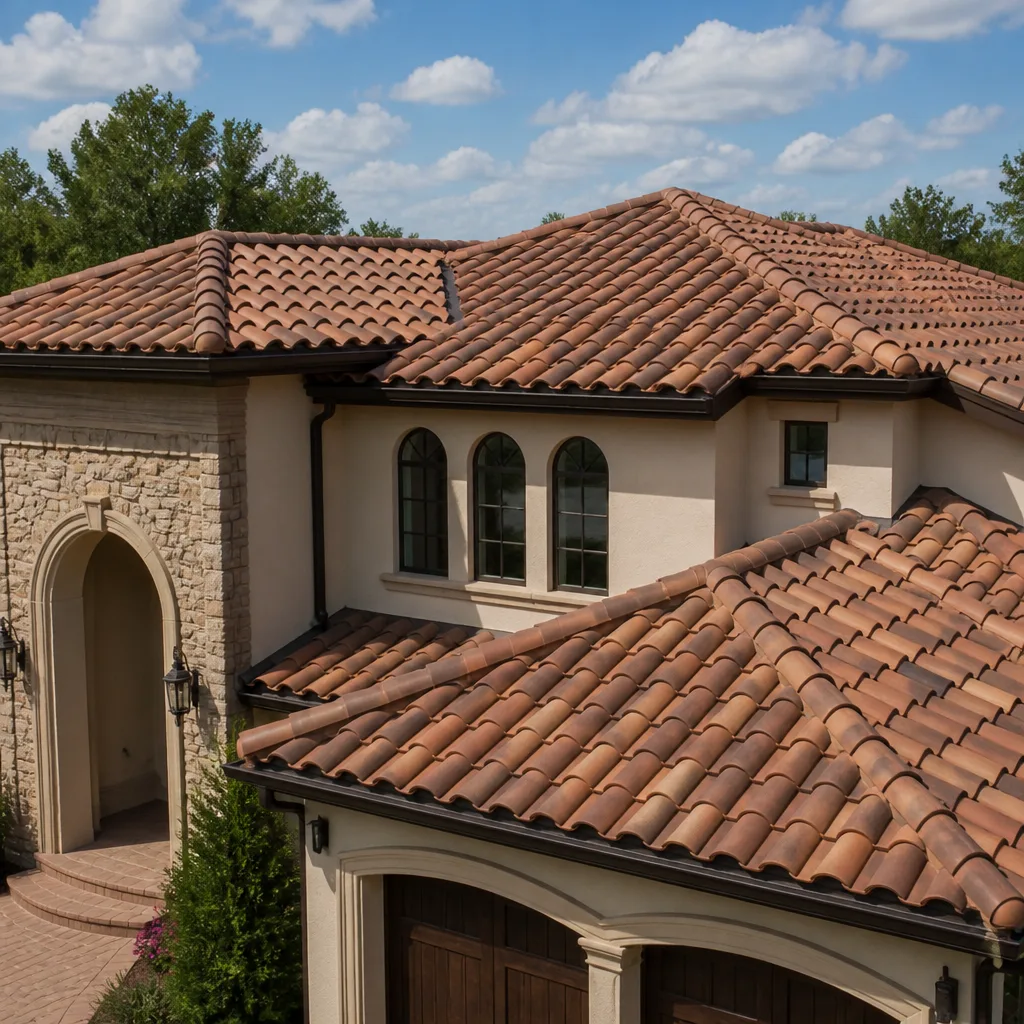 Tile roofing
 GAF
GAF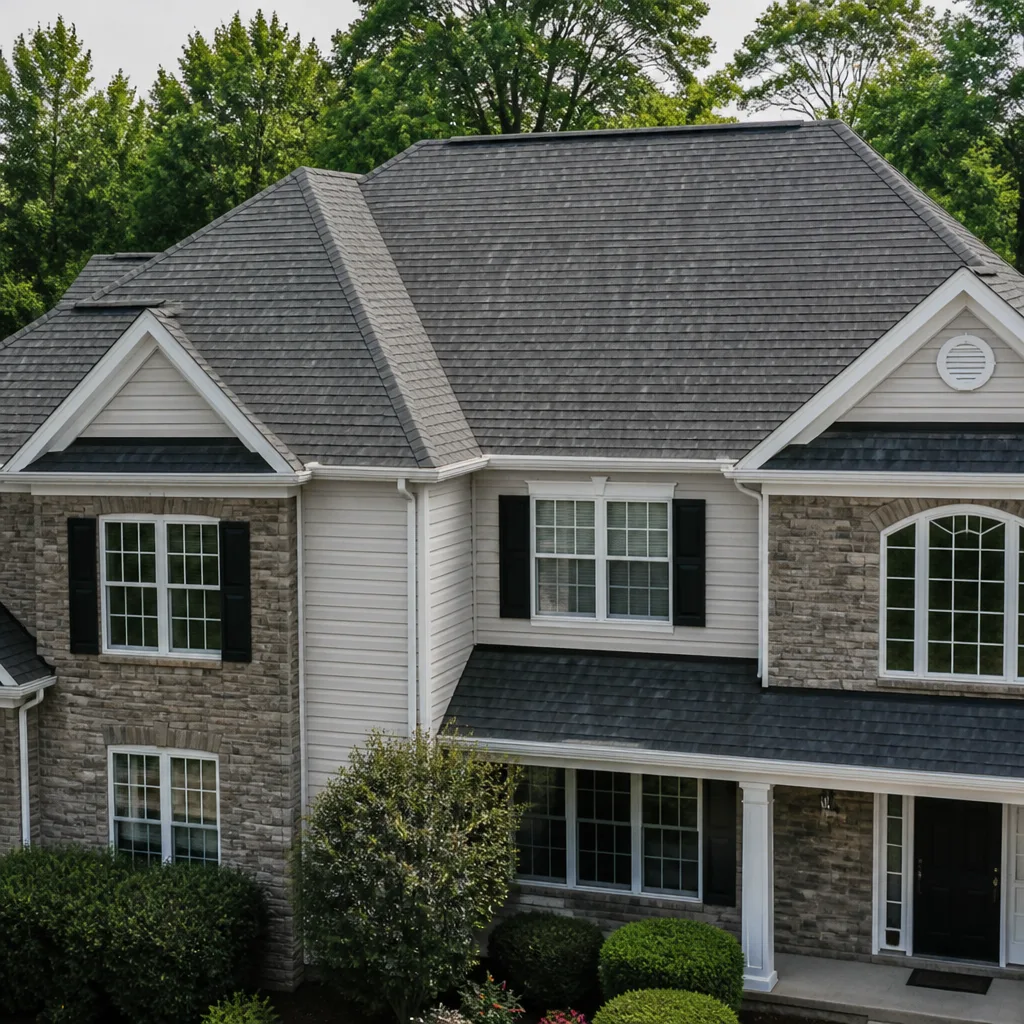 Owens Corning
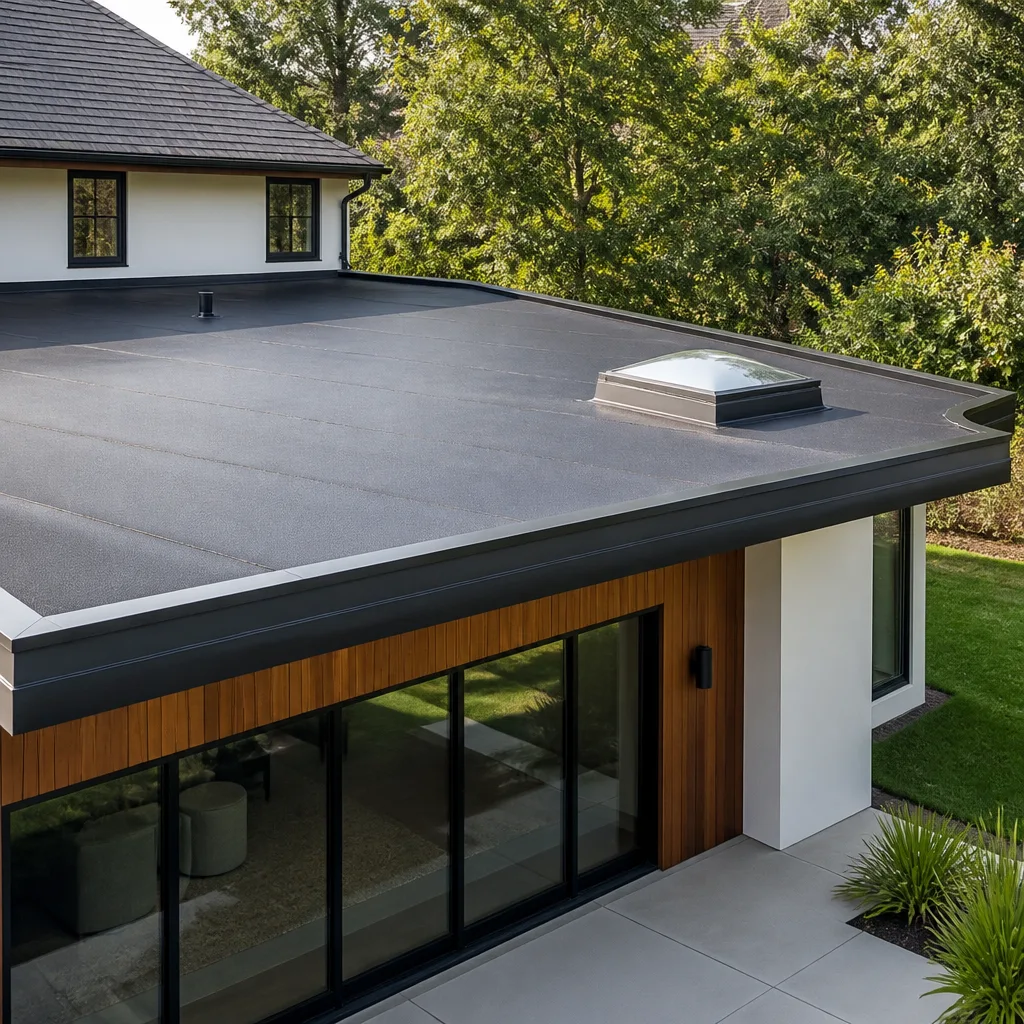 Flat & low-slope
Free roof inspection with deck photos before we talk money - GAF and Owens Corning certified installation
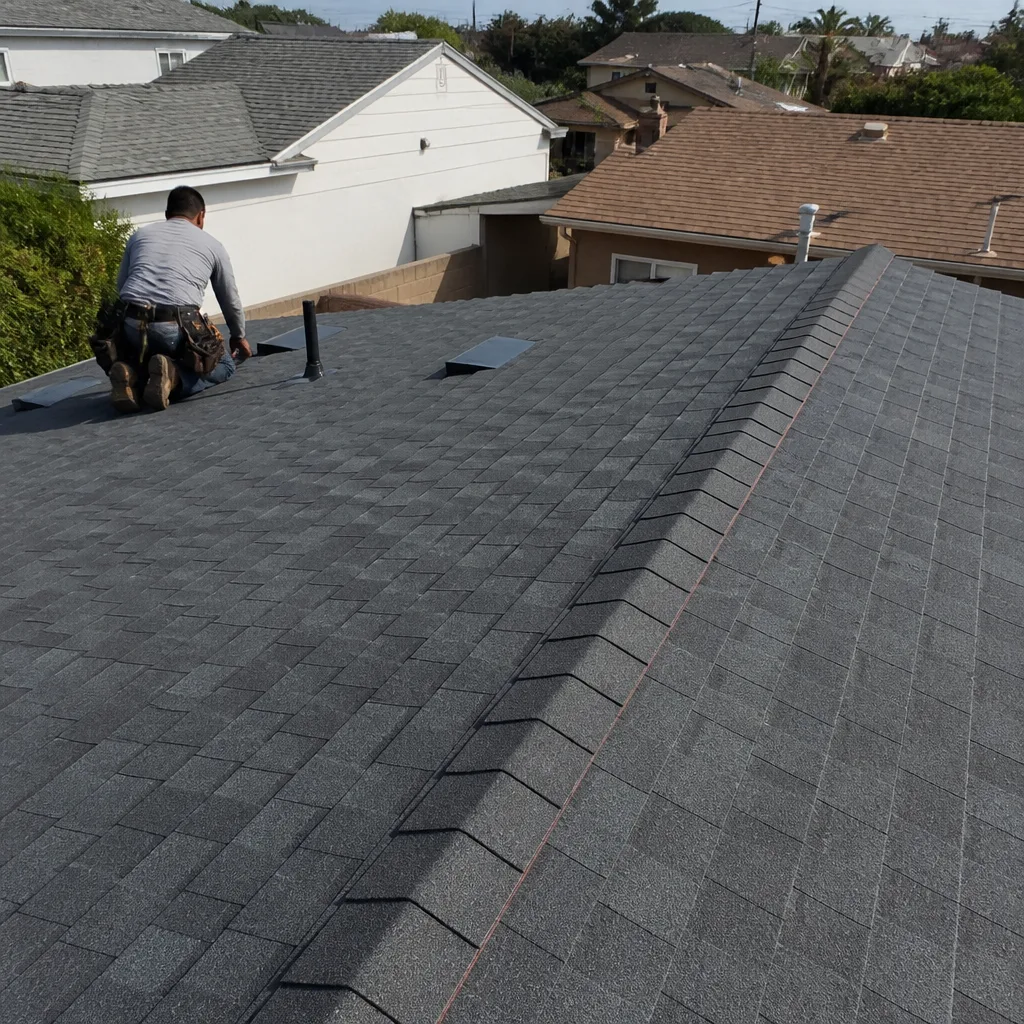
IKO Ridge Vent Installation: The Torrance Owner’s Guide
We stock and install IKO-compatible ridge vent systems throughout Torrance, with typical installed pricing running $850 to $1,450 depending on linear footage and whether the old vent needs full removal. Most ridge vent replacements take one visit, and we carry IKO’s standard 4-foot vent sections plus the matching end caps on our trucks so there’s no second trip waiting on parts.
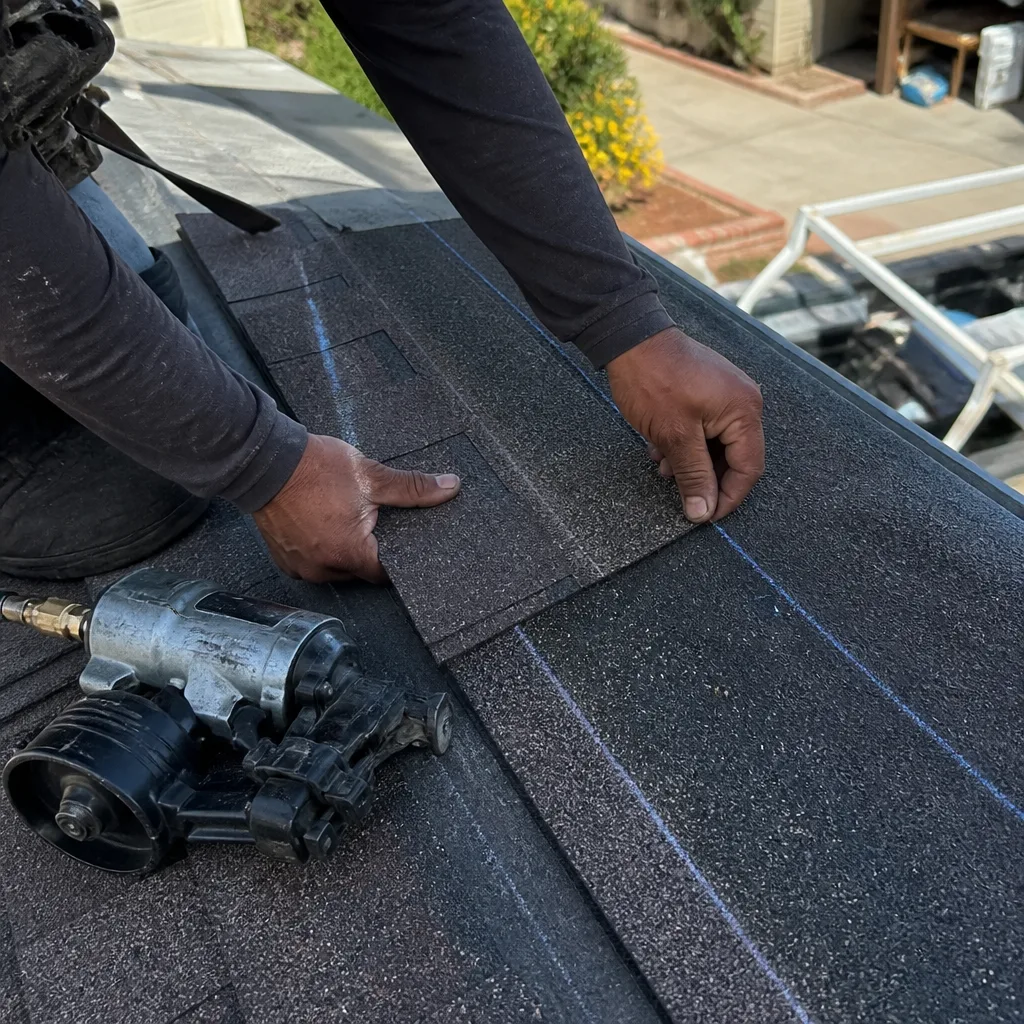
Here’s how homeowners usually discover the problem: a ridge vent doesn’t announce itself with a dramatic leak like a pipe boot does. What you notice first is heat. The upstairs hallway stays warm at 9 p.m. in August. The air conditioner runs longer than it used to. Or you see granules collecting in the gutter directly below the ridge line. That’s the vent fabric breaking down, and when it goes, the attic stops breathing the way IKO designed it to.
Our quick take on cost, compatibility, and timeline:
- Installed cost in Torrance: $850 to $1,450 for a typical single-family home’s ridge line
- Time on site: 3 to 5 hours for most replacements
- What we stock: IKO 4-foot vent sections, IKO end caps, compatible universal ridge vent with equal net-free area ratings, and the fasteners IKO specs for coastal climates
- Warranty: Written 365-day guarantee on the installation, included with every job
Which IKO Models This Applies To
IKO’s ridge vent lineup isn’t one product, and that matters for what goes on your roof. The two you’ll most often find on Torrance homes are the IKO Ultra HP and IKO’s standard Marathon ridge vent system. The Ultra HP has a higher net-free area rating (18 square inches per linear foot), which handles the steeper roof pitches and larger attic volumes common in split-level homes south of Torrance Boulevard. The Marathon line runs 12 to 14 square inches per linear foot and suits the long, low runs on ranch-style houses in neighborhoods like Seaside and Hollywood Riviera.
If you’re not sure which one is on your roof, check the vent’s underside or end profile. IKO stamps the model name on most vent sections produced in the last decade. Over time, the stamp fades, especially after years of direct sun exposure on a south-facing ridge line. When the label’s gone, a 12-inch-wide vent is almost always Ultra HP, while a 9-inch profile leans Marathon. Let us measure and match it. We won’t guess, because guessing with ridge vent means mismatched profiles that don’t seal, and a gap in your ridge vent is a standing invitation for ember intrusion during Santa Ana season.
We also install high-quality universal ridge vent products that match IKO’s airflow specifications when a homeowner wants options. But if your roof has a current IKO system and we’re replacing failed sections, IKO-compatible vent is what we quote first. The decision to go OEM versus a quality aftermarket equivalent is usually about one thing: the shingle manufacturer’s warranty language. Some IKO shingle warranties reference the use of IKO accessories. We’ll lay that out plainly before you spend a dollar, and the written price comes before any work starts.
Mercer Roofing Co Torrance is an independent roofing contractor and is not affiliated with or endorsed by IKO Industries. We also stock GAF, Owens Corning, and CertainTeed accessory parts.
Styles & brands we work with
Signs Your IKO Ridge Vent Installation Is Failing
- Heat buildup in the upper floor or attic: Ridge vents work by letting rising warm air escape. When the internal baffle or filter fabric clogs with dust and degraded adhesive, the vent’s net-free area effectively drops toward zero. Your attic starts holding heat like a parked car, and you feel it in the bedrooms closest to the roof.
- Sunlight visible through the ridge opening when you look from inside the attic: The vent’s weatherproofing membrane should block light and moisture but still pass air. If you can see daylight coming through the vent’s edges or the filter fabric has split along a crease, the vent is no longer shedding rain properly.
- Granule pile-up in gutters near the ridge line: When ridge vent backing cracks, shingle granules shear away from the ridge caps and slide straight down. This often gets mistaken for normal granule loss, but the pattern is distinct: concentrated at the ridge, not spread across the roof face.
- Birds or rodents getting into the attic through the ridge: Failing end caps and cracked vent profiles leave an entry point exactly where you don’t want one, especially if you live near Palos Verdes where squirrels treat ridge lines like highways. A blocked ridge vent won’t pass air, and a chewed one can let in more than air.
- Damp insulation or surface condensation inside the attic near the peak: During cloud-heavy months when the marine layer sits on the city, failed ridge vent lets trapped moisture condense against the underside of the roof deck. If you’re up there and the sheathing feels clammy along the peak, the ridge vent’s not venting.
See the difference
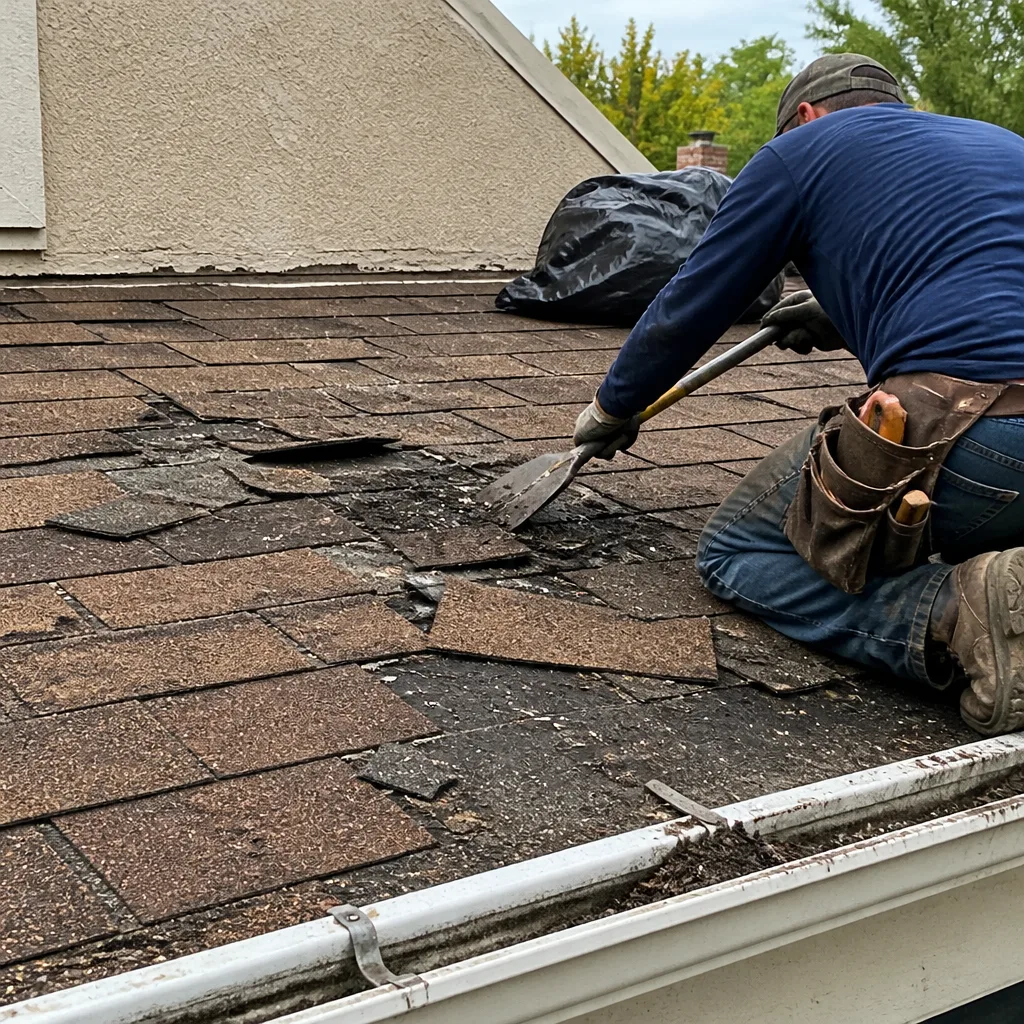 Before
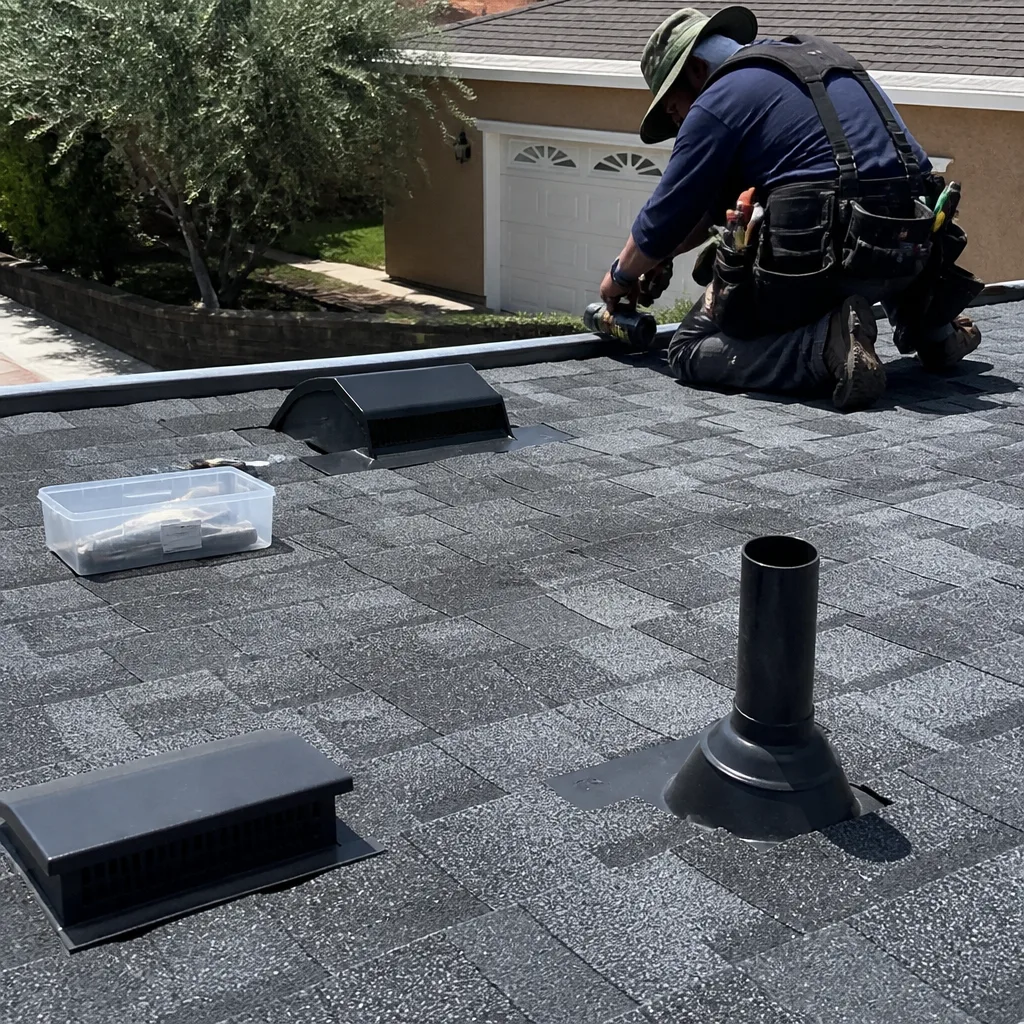 After
After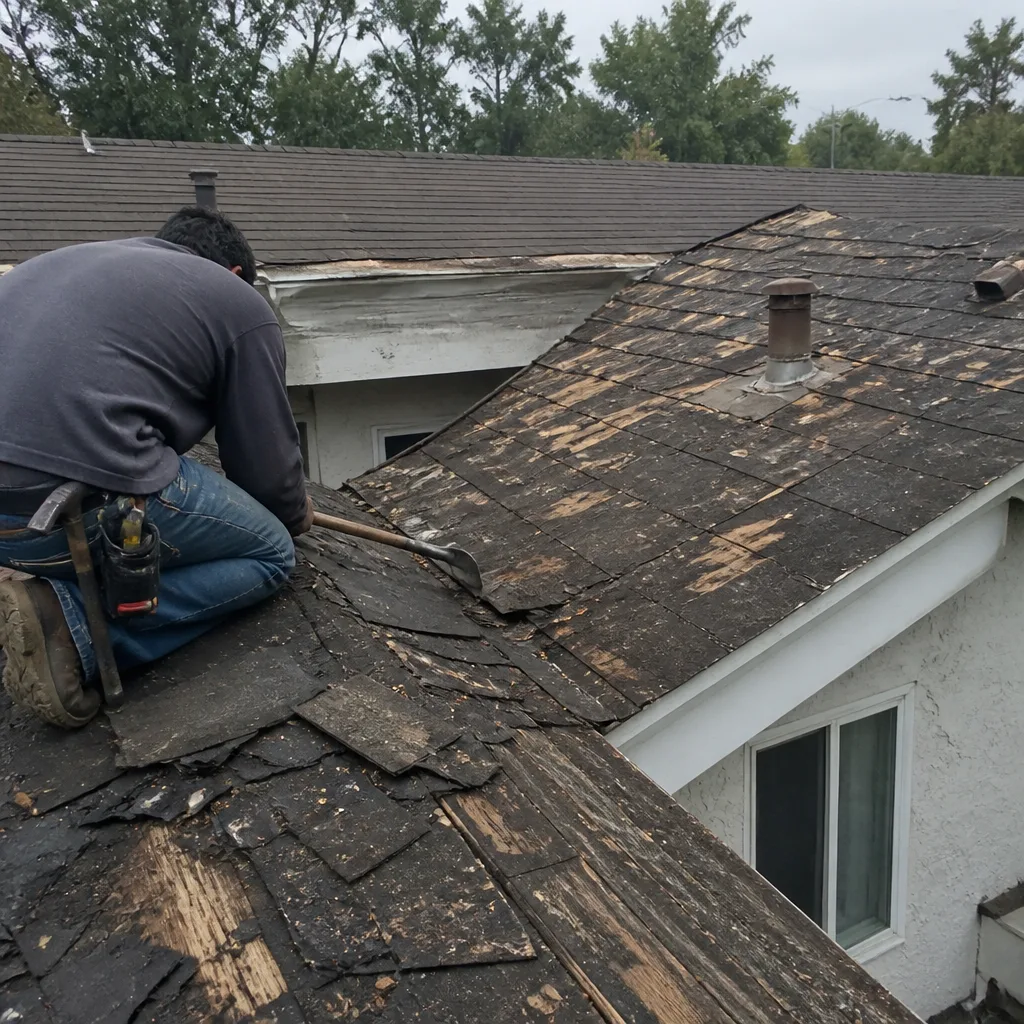 Before
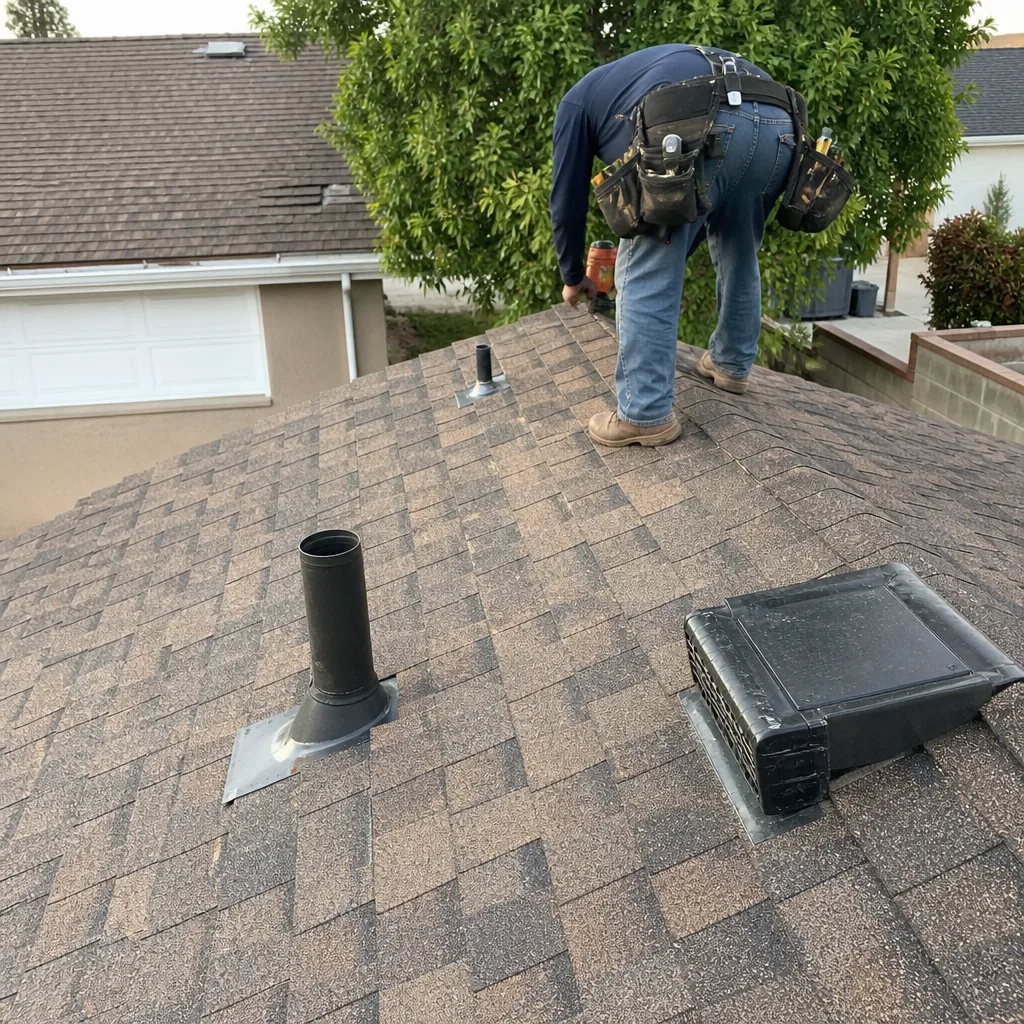 After
After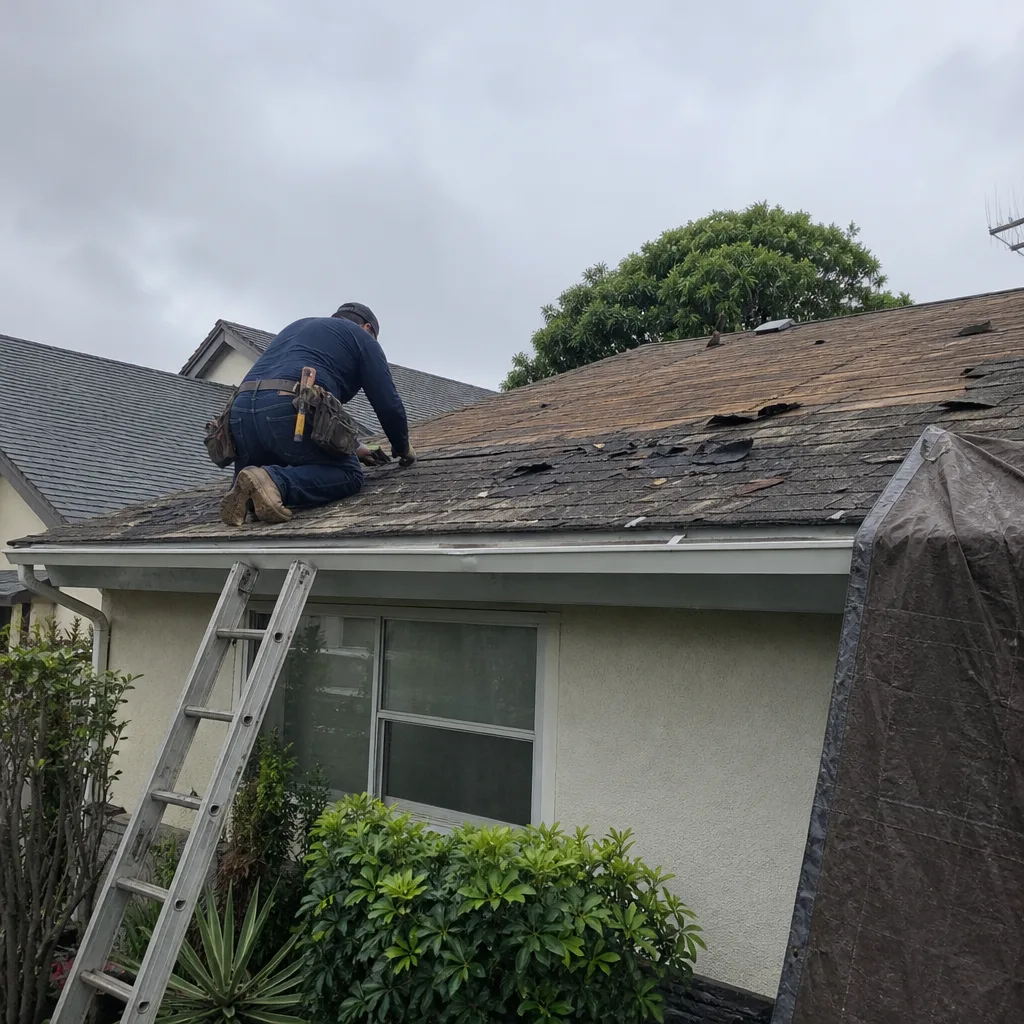 Before
 After
AfterReplacement Cost & What’s Included
For a typical Torrance single-family home with 30 to 45 linear feet of ridge line, IKO ridge vent replacement runs $850 to $1,450 installed. The range comes down to three variables:
- Linear footage of ridge line: More ridge means more vent sections and more fasteners, and since IKO vent sections are 4 feet, partial sections get sized and cut on the roof.
- Condition of the existing ridge cap shingles: If the caps are sound, we can set the new vent and resecure the caps. If the caps are cracked or deteriorated, they’ll need replacing too, which adds material and time.
- Nail type and corrosion resistance: IKO specifies particular fastener types for the vent profile you have. In Torrance’s salt-adjacent air, we use the corrosion-rated fasteners on every ridge vent job, not just when the code inspector insists. It costs a little more and saves you from a vent that lifts in three years.
Every price is written, in full, before our crew starts. The number on the quote is the number on the invoice. Every ridge vent replacement includes a written 365-day guarantee. If the vent doesn’t hold after we leave, we come back and make it right at no charge. No conditions, no fine print.
DIY or Call Us?
What you can check safely from the ground: standing water around the ridge line, visibly missing or shifted ridge cap shingles, and granule buildup in the gutters. A ladder and a trained set of eyes help, but if you’re comfortable on a low roof, you can inspect the vent’s end profile for cracks and look for daylight gaps along the seam. None of that requires tools.
Where DIY goes wrong is the part you can’t see from the ridge. Proper IKO ridge vent installation depends on getting the fasteners driven to the right depth and weatherproofing the end caps so water can’t sneak in under the shingles. Overdriven nails crush the vent profile and split the plastic. Underdriven nails back out with thermal cycling. A vent that’s 95 percent right still leaks, and by the time you see the stain on the ceiling, the decking has been wet for weeks. Roof work on a steep pitch is high-consequence work; one bad step on a ridge is all it takes. We’d rather you call us.
If you want a straight answer on whether your ridge vent is still doing its job, call (424) 435-5428. Grant Whitlock will tell you what he thinks it costs before you ever schedule anything.
FAQs
An IKO ridge vent installed correctly in Torrance typically lasts 15 to 20 years, though the constant moisture from the marine layer and strong sun exposure can shorten that to 12 to 15 years on south-facing ridges. The vent’s plastic profile and filter fabric both break down faster when they’re alternately soaked by overnight fog and baked by afternoon sun. If you call (424) 435-5428, we’ll give you an honest assessment of what’s left in yours.
In most cases, no. Ridge vent systems fail as a unit. If the plastic profile is cracked or the end caps are split, you have water intrusion risk, and patching one section doesn’t solve the rest. What we sometimes can do is repair sections when the failure is isolated to one end cap or a single 4-foot section. The way to know is a quick roof inspection, and we don’t charge for that. Call (424) 435-5428 and we’ll tell you what you’re actually looking at.
Most IKO ridge vent replacements in Torrance are done in a single visit, three to five hours from start to finish. That includes removing the old vent and failed caps, inspecting the decking at the ridge opening for moisture damage, installing the new vent, testing airflow, and resecuring everything. If the decking is rotted, you’ll know before we put a single nail in the new vent, and we’ll quote the extra work in writing before it begins.
Yes. Our trucks carry IKO 4-foot vent sections, IKO end caps, the fasteners IKO specs for coastal installations, and universal ridge vent that matches IKO’s net-free area ratings. In Torrance, that means most replacements happen on the first visit, without a follow-up trip for parts. If you need a specific IKO vent model confirmed, call (424) 435-5428 before we arrive and we’ll verify we have it on the truck.
If your IKO ridge vent is failing, the fix is straightforward, and you should know the price before you commit. Call (424) 435-5428 for a free, written estimate. We’ll send you the name and photo of the technician before they arrive, they’ll show a photo ID badge at your door, and the price you see in writing is the price the job costs. The roof is only doing its job when you never have to think about it; let’s get yours back to that.
Written by Grant Whitlock, Owner, Mercer Roofing Co Torrance at Mercer Roofing Co Torrance, serving Torrance and nearby areas.